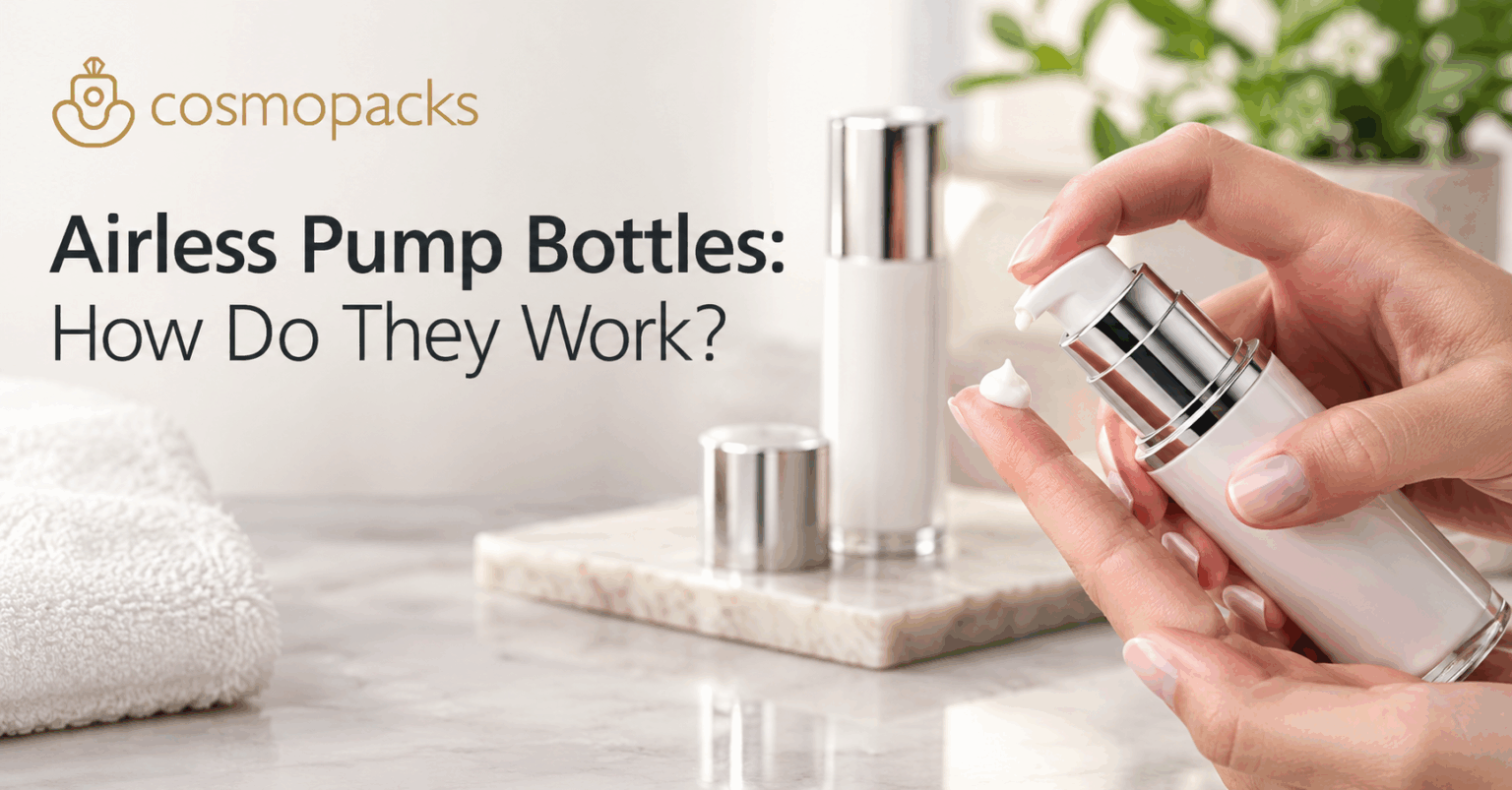
An airless pump bottle works by using a vacuum effect instead of a straw or dip tube: pressing the pump lowers the air pressure inside the chamber, which pushes the product up and out through a small opening while the vacuum reseals the remaining product away from air. That’s why airless bottles keep creams, serums, and lotions fresher for longer, dispense in precise, consistent doses, and waste far less product than a standard pump or jar. If you’ve ever wondered why your favorite serum comes in one of these sleek little bottles instead of a jar, that’s the mechanism doing the work behind the scenes.
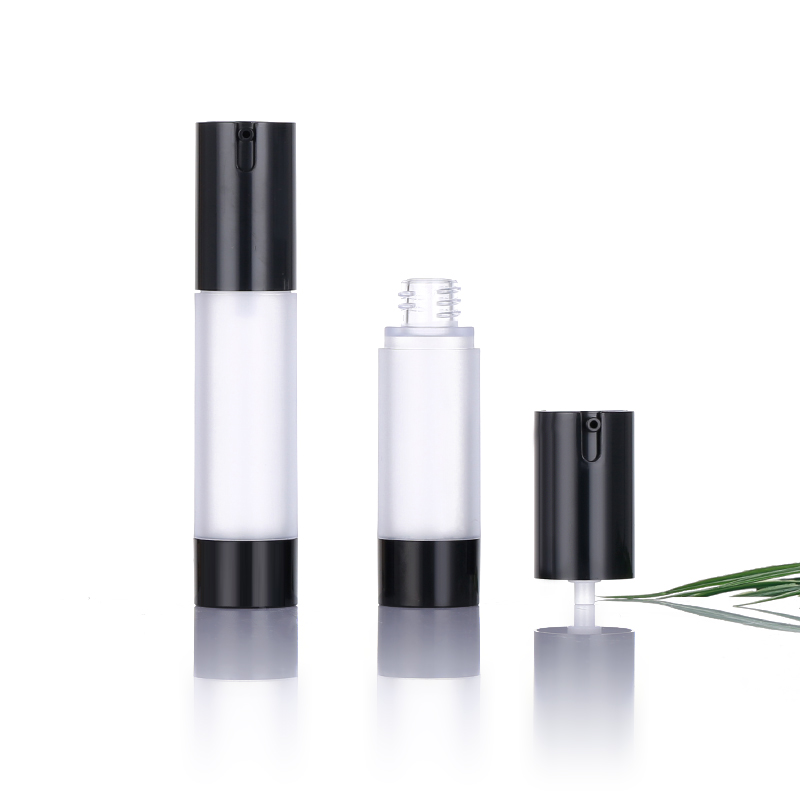
I’m George Lu, and I work with Cosmopacks, a cosmetic packaging manufacturer based in Shangyu City, Zhejiang Province, China. I spend a lot of my time walking brand owners through exactly what happens when they press down on an airless pump, because most people who buy our airless pump bottles have never actually seen one taken apart. Once you understand the mechanics, a lot of the confusion around leaking pumps, refilling, and “why won’t this thing prime” starts to make sense.
What Is an Airless Bottle, and How Does It Work?
An airless bottle is built around a piston, not a dip tube. Inside the container sits an inner sleeve that moves upward as product is dispensed, following the liquid up the bottle rather than letting air rush in to replace it the way a normal pump bottle does.
When you press the pump head, the air pressure inside the chamber drops. That pressure drop is what pushes the product up and out through the small dispensing opening. As the product moves out, the internal piston rises behind it, keeping the remaining product sealed off from the outside air.
This is the core difference between airless packaging and a regular lotion pump: a standard bottle lets air in every time you use it, which speeds up oxidation. An airless bottle never lets air touch the product at all.
In short: an airless pump bottle dispenses product through a vacuum effect while a rising internal piston keeps the remaining contents completely sealed off from air.
Why the Double-Layered Wall Matters
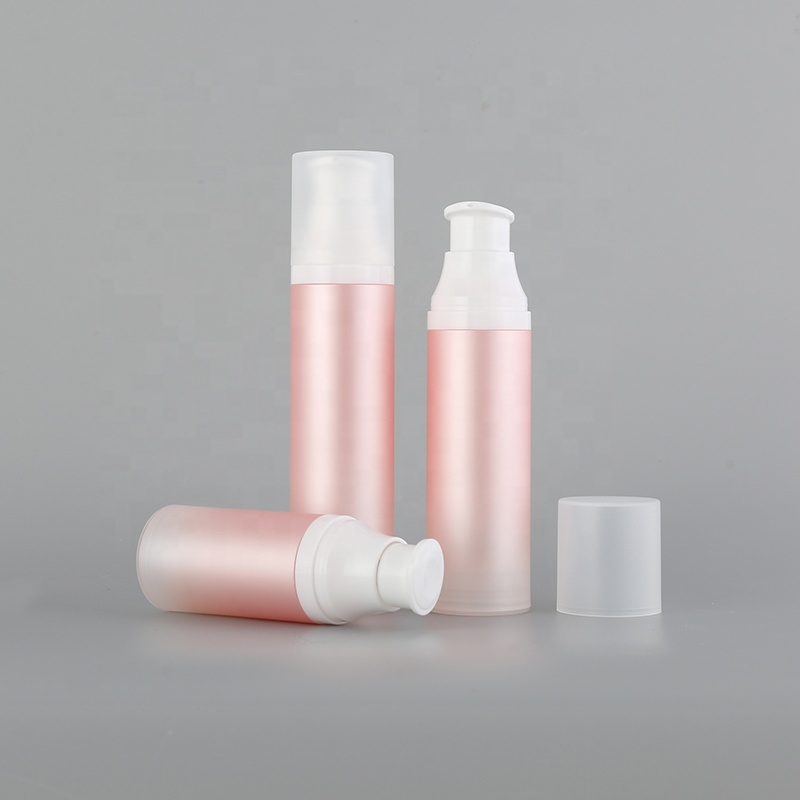
Most of the acrylic airless bottles Cosmopacks produces use a double-layered wall construction. The double wall does two jobs at once: it keeps the internal environment sterile, and it adds physical durability so the bottle can handle shipping and daily handling without cracking.
We also offer opaque wall options for brands that want to block UV exposure, since light degradation is a real risk for many actives used in skincare formulas. A brand making a vitamin C serum, for example, has very different packaging needs than a brand making a thick body butter, and the wall structure is one of the first things we talk through with a client.
Why Is My Airless Pump Bottle Not Working?
This is one of the questions I hear most often from clients and from their end customers. Airless pumps are mechanical, and like any mechanical part, they can occasionally jam, dry out at the nozzle, or lose their prime if they sit unused for a while.
The most common causes we see are:
- Dried product blocking the small dispensing opening at the nozzle tip
- The pump not being primed after the first few uses
- The bottle being stored upside down or sideways for an extended period
- Overly viscous formulas that need a few extra pumps to move through the mechanism
- A piston that has become misaligned from being dropped or knocked
We put together a full walkthrough of these issues, with fixes for each one, on our site: Airless Pump Bottle Not Working: 5 Quick Fixes. If the pump won’t budge at all rather than just failing to dispense, that’s usually a different issue, and we cover that separately in How to Open an Airless Pump Bottle and What to Do When It Won’t Budge.
Most airless pump problems come down to a blocked nozzle or a pump that simply hasn’t been primed yet, both of which are usually fixable without replacing the bottle.
Are Airless Pump Bottles Good? What Are the Real Benefits?
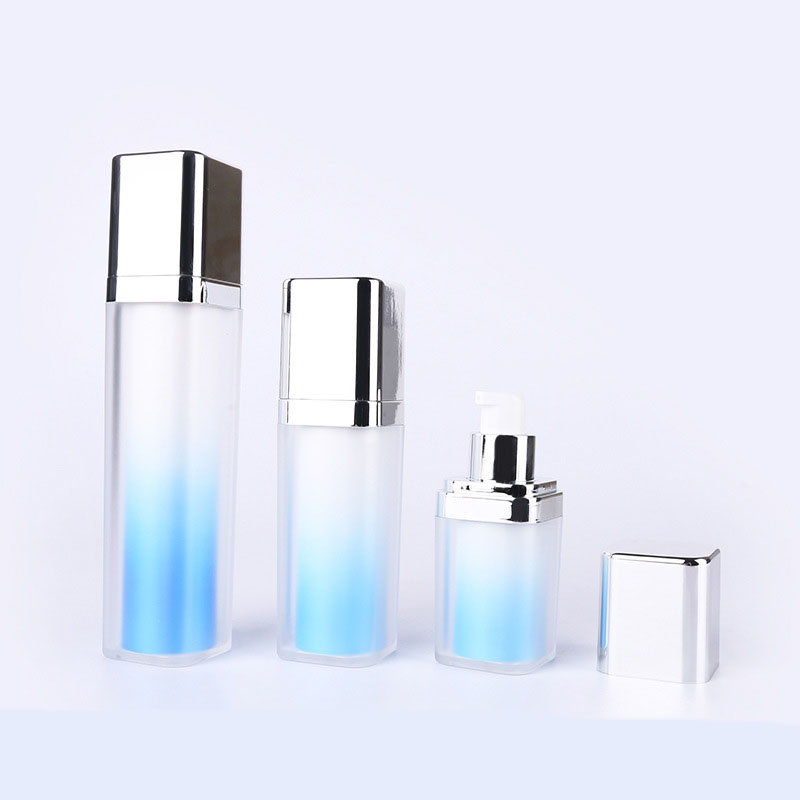
Yes, and the reasons come down to what the mechanism is actually designed to prevent: air exposure, contamination, and waste. Cosmopacks has built its airless bottle line specifically around these four benefits.
Air Insulation and Contamination Control
Airless containers prevent contact between the product and outside air, which minimizes oxidation and helps the formula hold onto its effectiveness. That same barrier also reduces the risk of contamination, which matters a lot for skincare products that get used with fingers dipped into a jar day after day.
Extended Shelf Life Without More Preservatives
Because oxygen and bacteria are kept out, airless bottles can extend a product’s shelf life without the brand needing to load the formula with additional preservatives. That’s a meaningful cost and formulation advantage, especially for brands working with natural or sensitive actives that degrade quickly once exposed to air.
Minimal Wastage Through Precise Dosing
The pumping system in an airless bottle is built to handle highly viscous liquids without leaving product stuck to the container walls. Cosmopacks’ airless pumps can be calibrated to controlled output levels of 0.20cc, 0.5cc, or 1ml per press, so the dosage stays consistent from the first use to the last. That precision is also why airless bottles work well for medical creams, where consistent dosing actually matters.
A More Premium Look and Feel
Beyond the function, airless packaging has a sleek, elevated look that jar packaging and standard pump bottles don’t really match. For brands trying to build a premium shelf presence, that visual difference is often just as important as the functional one.
Airless bottles are good specifically because the sealed piston mechanism cuts oxidation, contamination, and product waste all at the same time, something a standard jar or pump simply can’t do.
Can You Refill an Airless Pump Bottle?
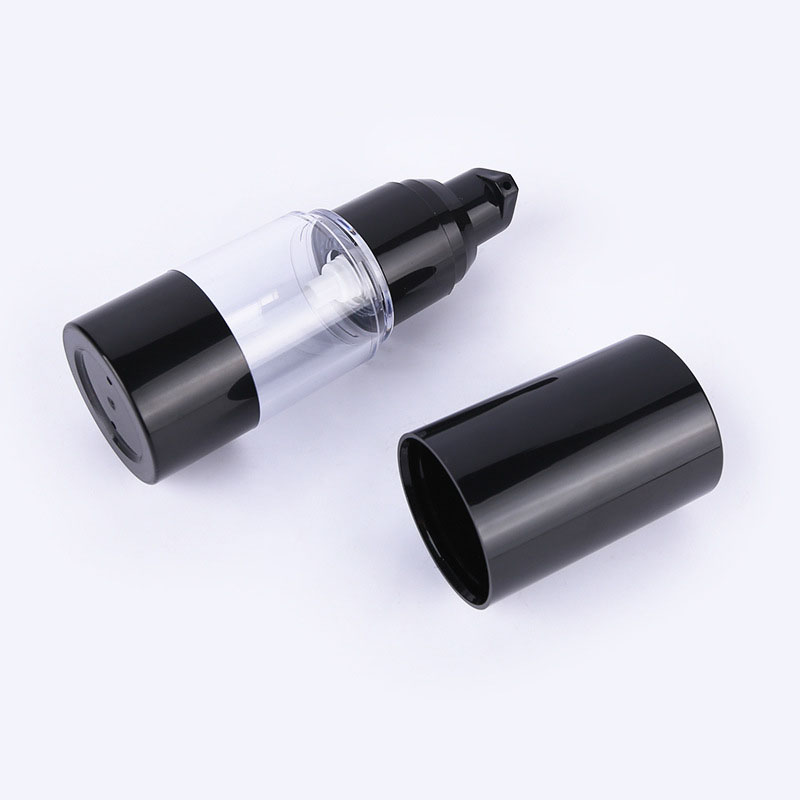
It depends on the bottle’s design. Some of our airless bottles have a removable base or top that makes refilling straightforward, while others need to be dismantled to get product back inside. Not every airless bottle on the market is built to be reopened.
The quality of the bottle plays a real role here too. A well-made airless bottle holds up to being refilled without the piston seal degrading, which protects both your wallet and the amount of packaging waste you generate over time. If refillability matters to your brand, it’s worth asking your supplier directly which of their airless bottle models are designed for it, since not every SKU in a catalog is engineered the same way.
One more thing worth knowing: if you do refill an airless bottle, do it in a clean, sterile environment. Because the whole point of the piston mechanism is to keep contamination out, refilling in a dirty environment undoes exactly the benefit the packaging was designed to provide.
Whether an airless pump bottle can be refilled comes down to its specific base or top design, and refilling should always be done in a clean, sterile setting to preserve the container’s contamination protection.
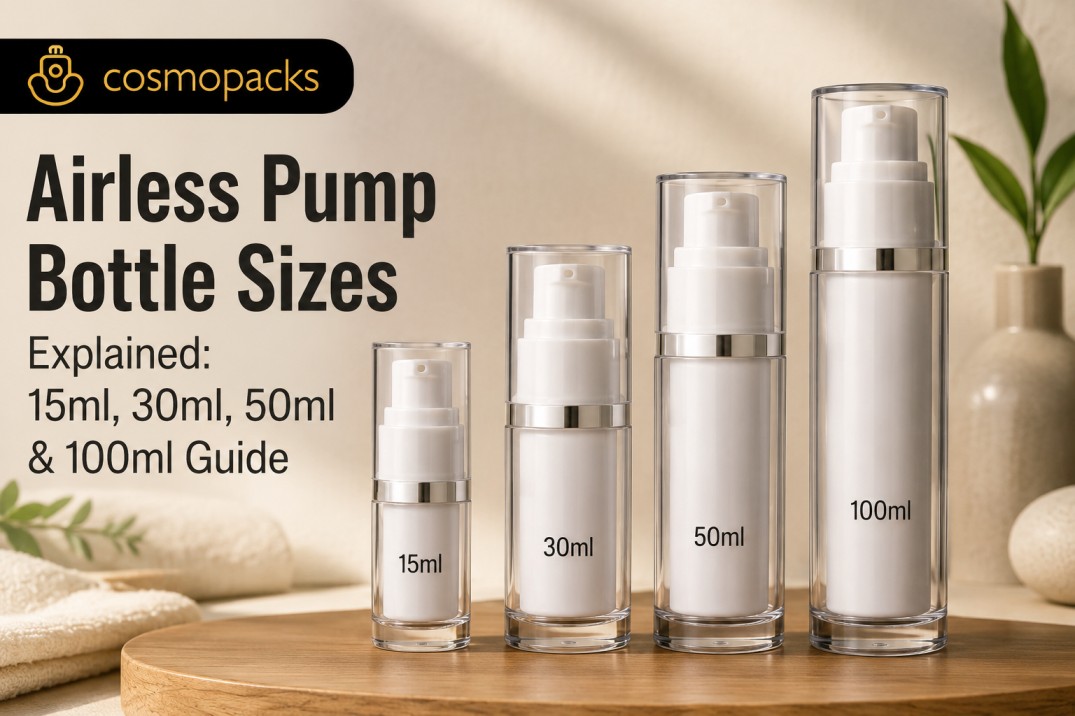
What Sizes Do Airless Pump Bottles Come In?
Cosmopacks produces airless bottles across a wide range of capacities, since a 10ml eye cream and a 150ml body lotion need very different packaging. Here’s a general look at how size typically maps to product type based on what we manufacture:
| Capacity Range | Common Product Type | Typical Container Style |
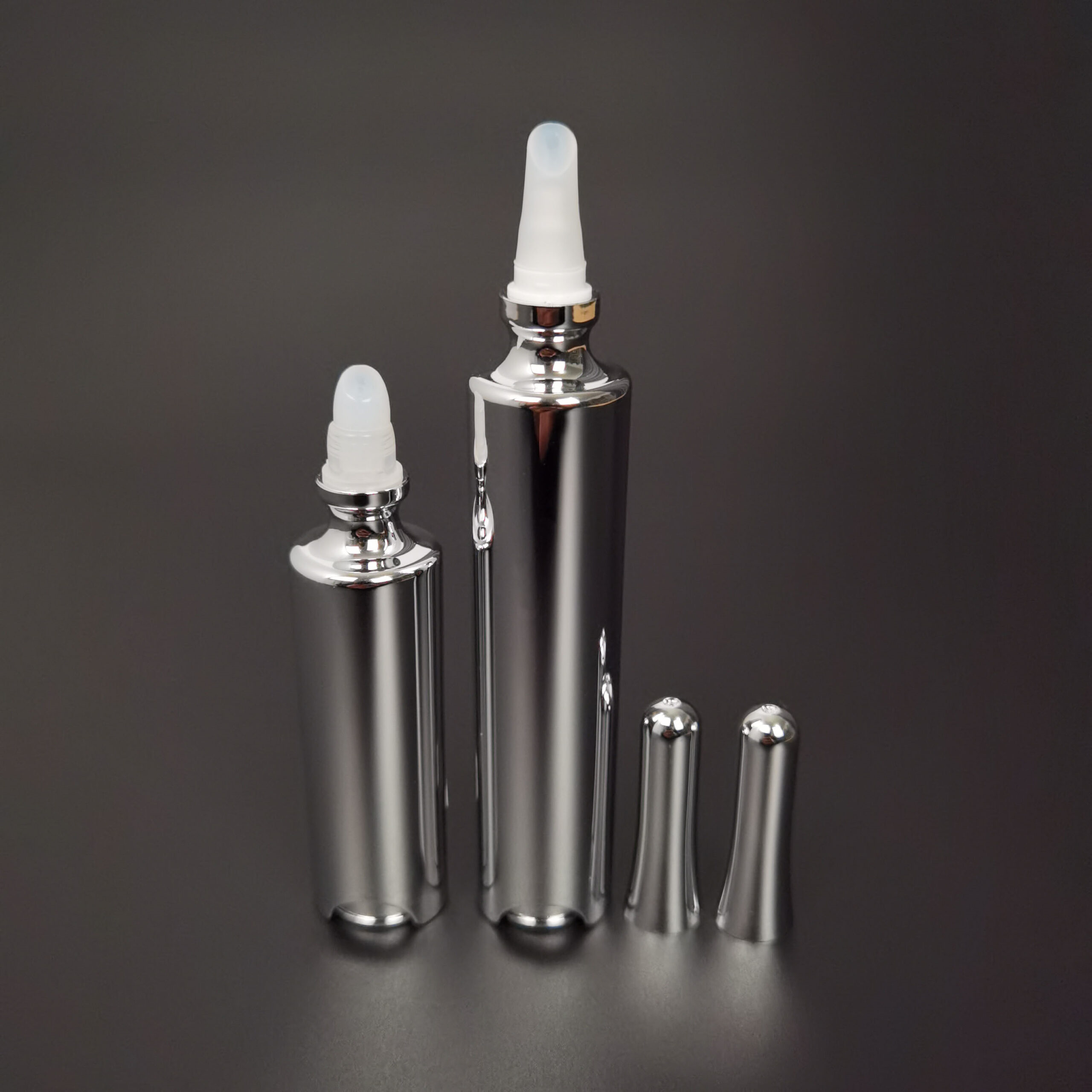
| 5ml – 15ml | Eye creams, serums, spot treatments | Syringe-style airless bottles, small pump jars |
| 30ml | Face serums, toners, foundations | Round or square airless pump bottles |
| 50ml | Lotions, foundations, hair care serums | Acrylic or PP airless pump bottles |
| 100ml – 120ml | Body lotions, larger skincare formulas | PP or acrylic airless lotion bottles |
| 150ml | Body wash, larger-format lotions | Large-capacity airless pump containers |
We go into much more detail on how to choose the right size, including the tradeoffs between different materials at each size range, in our guide: Airless Pump Bottle Sizes Explained: 15ml, 30ml, 50ml, 100ml Guide.
How Cosmopacks Manufactures Airless Bottles
I get asked a lot about what actually happens on our production floor, so it’s worth walking through it. Cosmopacks runs a facility in Shangyu City, Zhejiang Province, with roughly 12,000 square meters of factory space and more than 30 sets of injection molding machines. Across a year, that setup produces around 20 million packaging sets, with a quality rate we track at 98%.
Our manufacturing process follows six stages:
- Raw Material Preparation – We source raw material from reliable suppliers and screen out impurities before production starts, using continuous quality improvement checks to catch minor defects early.
- Injection Molding – This is where the airless bottle’s shape and structure come together, using thermoplastic materials chosen for durability and consistency.
- Surface Treatment – Bottles go through cleaning, polishing, and sometimes plating or heat treatment to improve their finish and resistance to wear.
- Printing Process – We apply screen printing, hot stamping, or vacuum coating depending on the finish a brand wants, from matte to metallic.
- Assembly – Automated pump head assembly machines put the bottle and its airless mechanism together with precision.
- Inspection – Every batch goes through pressure resistance, deform resistance, and leakage resistance testing before it ships, and brands are welcome to run their own third-party inspection too.
You can read more about how this workflow is structured on our Lean Manufacturing page.
Cosmopacks builds its airless bottles through a six-stage process, from raw material screening to leakage testing, designed to catch defects before a bottle ever reaches a client’s warehouse.
Choosing the Right Airless Bottle for Your Brand
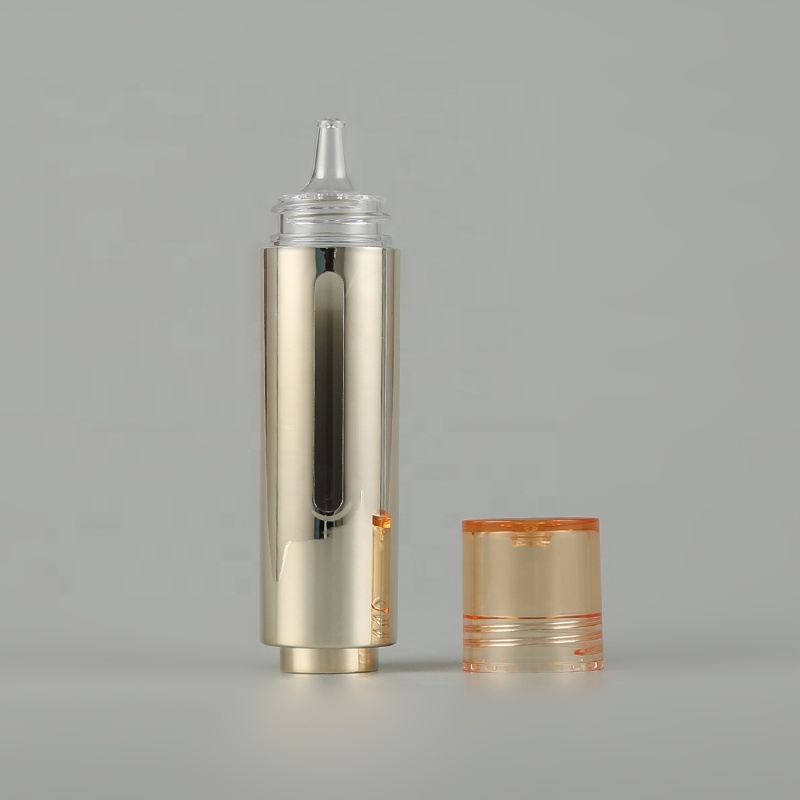
Not every airless bottle is right for every product, and this is usually the first conversation I have with a new client. A few of the factors that actually change the recommendation:
- Formula viscosity – Thicker creams need a pump mechanism calibrated differently than a thin serum.
- Ingredient sensitivity – Some essential oils and actives can react with certain plastics, which is part of why we offer PP, PETG, PCR, glass, and acrylic as material options.
- Brand positioning – A luxury skincare line often wants an acrylic double-wall bottle with metallic hot stamping, while a clean-beauty brand might lean toward PCR or PP for its recyclability.
- Order volume – Cosmopacks sets a minimum order quantity as low as 5,000 units, and we can adjust further for startups who are just getting their first production run off the ground.
For brands weighing material choice specifically around environmental impact, we cover our sustainable options, including PCR, PLA, and bamboo materials, on our Sustainability page. And if a brand wants a fully custom bottle rather than something off our existing catalog, that’s handled through our OEM solution, where we take a client’s design idea from concept through to mass production.
Key Takeaways
- An airless pump bottle dispenses product using a vacuum effect and a rising internal piston that keeps air from ever touching the remaining product.
- The main benefits are reduced oxidation, lower contamination risk, longer shelf life without extra preservatives, and minimal product waste.
- Most airless pump problems, like a bottle that won’t dispense, come down to a blocked nozzle or an unprimed pump.
- Whether a bottle is refillable depends on its specific base or top design, and refills should always happen in a clean environment.
- Cosmopacks manufactures airless bottles from 5ml up to 150ml, across materials including PP, PETG, PCR, glass, and acrylic, with a minimum order quantity as low as 5,000 units.
Frequently Asked Questions
- Can you refill an airless pump bottle?
Some airless pump bottles are refillable if they have a removable base or top; others require dismantling. Refillability depends entirely on the specific bottle’s construction, so it’s worth checking with the manufacturer before assuming a given bottle can be reopened. - Why is my airless pump bottle not working?
The most common causes are a blocked nozzle from dried product, a pump that hasn’t been primed, or the bottle sitting unused for a long stretch. A full breakdown of fixes is available in our guide on airless pump bottles that aren’t working. - Are airless pump bottles good?
Yes. Airless pump bottles reduce air exposure, cut contamination risk, extend shelf life without added preservatives, and dispense product with minimal waste, which is why they’re widely used for creams, lotions, foundations, and serums. - What is an airless bottle and how does it work?
An airless bottle uses a vacuum effect to push product out when the pump is pressed, while an internal piston rises behind the dispensed product to keep the remainder sealed off from air and contamination. - What sizes do airless pump bottles come in?
Cosmopacks produces airless bottles ranging from small 5ml to 15ml syringe-style containers for eye creams up to 150ml bottles for body lotion and body wash, with 30ml and 50ml being common sizes for serums and foundations.
If you’re evaluating cosmetic packaging options for a new or existing product line, our team at Cosmopacks can walk you through material, size, and customization choices based on your formula and order volume. You can see our full product range, including cosmetic bottles, cosmetic tubes, lotion bottles, roll-on bottles, recycled bottles, and makeup packaging, or reach out directly through our contact page.
About the Author
George Lu is a contact representative at Cosmopacks, a B2B wholesale cosmetic packaging manufacturer based in Shangyu City, Zhejiang Province, China, serving cosmetic and skincare brands worldwide. Cosmopacks specializes in designing and manufacturing airless bottles, cosmetic tubes, jars, and makeup packaging using materials including PP, PETG, PCR, glass, and acrylic. You can reach George and the Cosmopacks team at george@cosmopacks.com or +1 626 203 5398, or learn more about the company on the Cosmopacks About page.