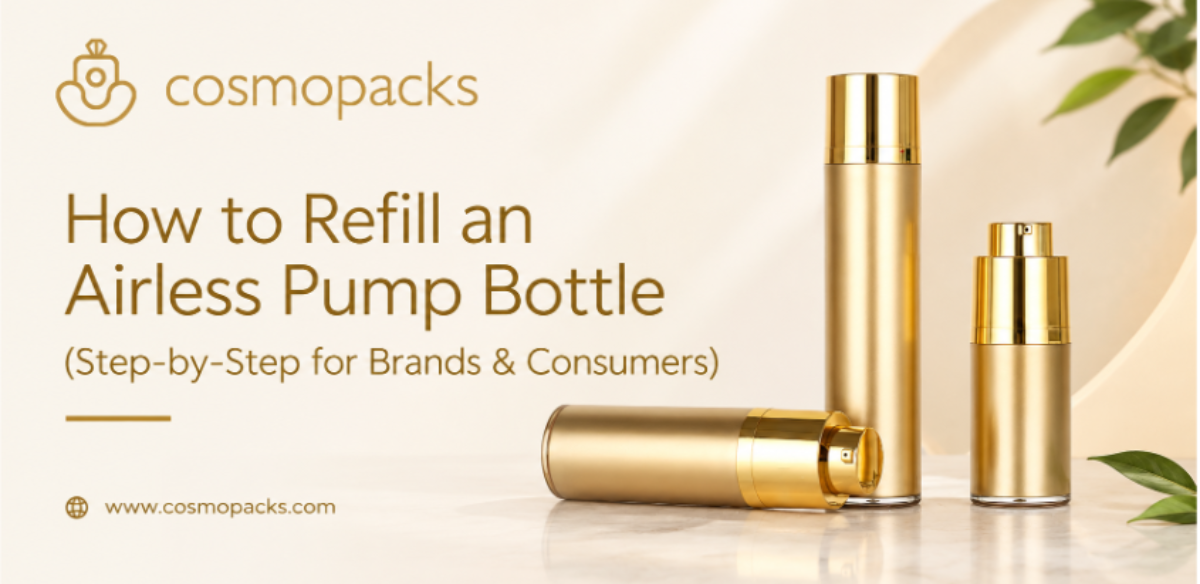
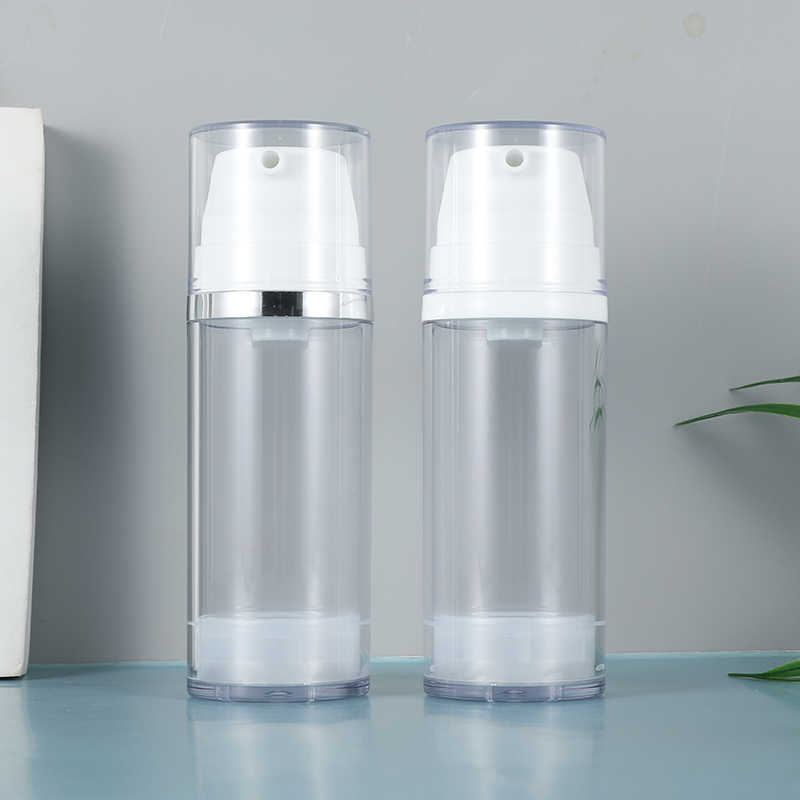
Most airless pump bottles can be refilled, but how easy that is depends on the bottle’s base design, pump type, and material. In general, you release the remaining vacuum, separate the base or inner sleeve from the outer shell, clean the chamber, add new product, and reseat the pump so the airless seal resets. This guide walks through exactly how that process works, what makes a bottle refillable in the first place, and how brands source refillable airless pump bottles from Cosmopacks, a wholesale cosmetic packaging supplier.
Can You Refill an Airless Pump Bottle?
At Cosmopacks, this is one of the first questions brands ask once they move past the sample stage and start thinking about how their customer will actually use the bottle day to day. The honest answer is: it depends on how the bottle was built.
Whether an airless pump bottle can be refilled depends on the design and construction of the bottle itself. Some bottles have a removable base or a removable top that make refilling straightforward, while others are sealed in a way that means the whole unit has to be dismantled to get product back inside. The quality and durability of the bottle also affects how many times it can realistically be refilled, which is why choosing a well-made airless pump bottle from the start matters if reuse is part of the plan.
For anyone refilling at home or in a lab setting, it’s also worth doing it in a clean and sterile environment, since that prevents contamination of the product that goes back inside the bottle. Cosmopacks designs a range of airless bottles with this kind of reuse in mind, including bottles built specifically to be refilled rather than thrown away after one cycle.
In short: airless pump bottles can be refillable, but it comes down to the base/top design and the quality of the bottle, not just the fact that it’s labeled “airless.”
How Does an Airless Pump Bottle Actually Work?
Before getting into the refill steps, it helps to understand why airless bottles behave differently from a standard lotion pump. Airless pumps and bottles work by utilizing a vacuum effect to dispense the product. When the pump is depressed, the air pressure inside the bottle decreases, which pushes the product up and out through a small opening in the pump.
As the product is dispensed, that vacuum effect keeps the remaining product tightly sealed and protected from exposure to air and other contaminants, which is what causes degradation and spoilage in open-air packaging. This is also why airless bottles can help extend the shelf life of a formula without relying on added preservatives.
This same vacuum mechanism is also the reason refilling an airless bottle is a slightly different process than refilling a standard pump bottle: once product is removed and air pressure changes inside the chamber, the pump has to be reseated correctly so the vacuum seal can reset and keep working as intended.
An airless pump bottle stays product-safe by using air pressure, not air exposure, to push the formula out with every press.
How to Refill an Airless Pump Bottle: A Step-by-Step Guide
The exact steps can vary slightly depending on the bottle’s base design, but the general process for refilling an airless pump bottle looks like this:
- Check the bottle’s refill design first. Look at the base and the top of the bottle. Some airless bottles have a removable base or a removable top built in specifically for refilling; others are sealed as a single-use unit and were never designed to be taken apart.
- Dispense any remaining product. Press the pump until no more product comes out. This relieves the existing vacuum inside the chamber before you open the bottle.
- Separate the base or inner sleeve from the outer shell. On a refillable design, this is usually done by twisting, unscrewing, or gently pulling the base away from the body of the bottle.
- Clean the chamber in a sterile environment. Rinse and dry the inner chamber and pump stem thoroughly. Refilling in a clean, sterile environment is important for preventing contamination of the new product going into the bottle.
- Add the new product. Fill the inner chamber with the new formula, being careful to avoid trapping large air pockets, since airless bottles are designed to work with minimal air inside.
- Reseat the pump and reassemble the base. Press the base or inner sleeve firmly back into place so the airless seal can reset.
- Prime the pump. Press the pump a few times until product flows consistently, which confirms the vacuum seal has reset properly.
For consumers, this process works best on bottles that were marketed as refillable airless pump bottles from the start. For brands, building this kind of base or top design into the packaging from the beginning is what makes refilling realistic for the end customer rather than just a claim on the label.
What Makes an Airless Bottle Refillable by Design?
Not every airless bottle is built the same way, and that construction is what separates a bottle that can genuinely be refilled from one that only looks like it can. A few features matter most.
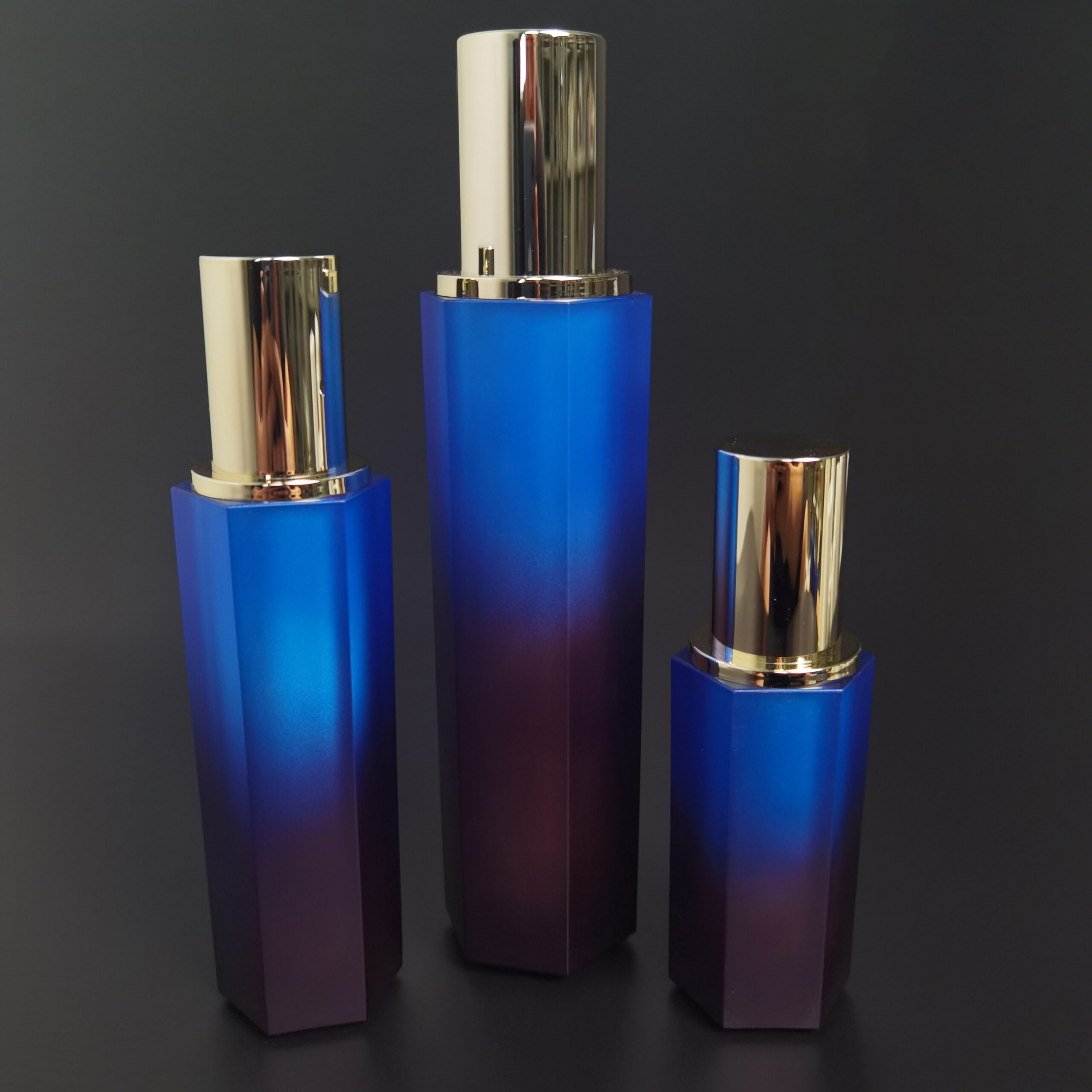
Double-layered walls. Acrylic double-layered walls in airless pump bottles create a sterile environment for the contents inside while also making the bottle more durable, which supports repeated use rather than a single fill. An example of this kind of build is the acrylic airless bottle with an inner PP bottle, where the inner bottle can be separated from the outer acrylic shell.
Air insulation. Airless containers are designed to prevent contact between the product and air, which minimizes oxidation and reduces the risk of contamination. That same sealed structure is what has to be rebuilt correctly every time a bottle is refilled.
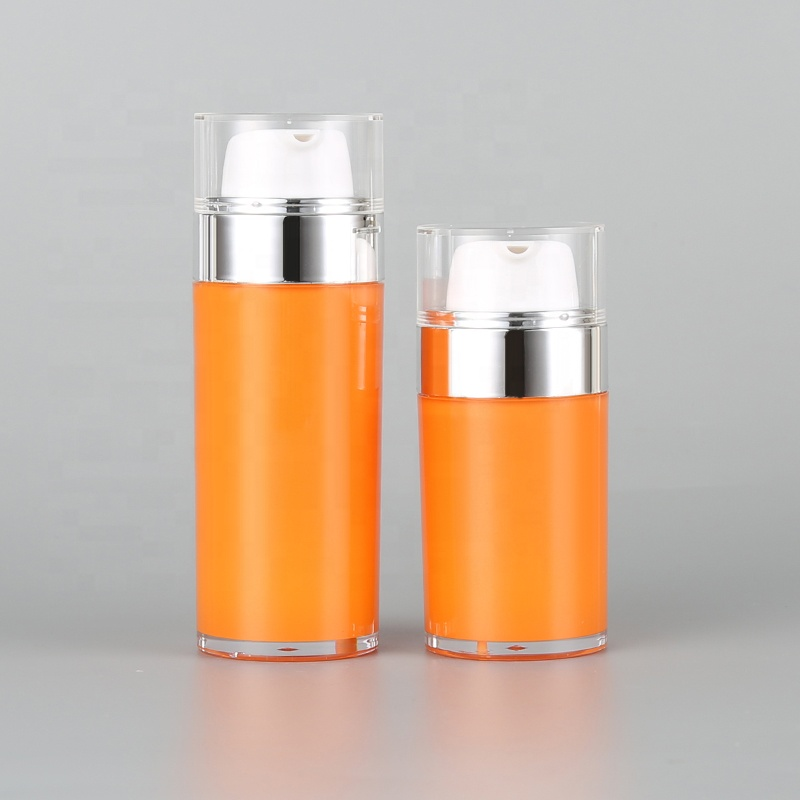
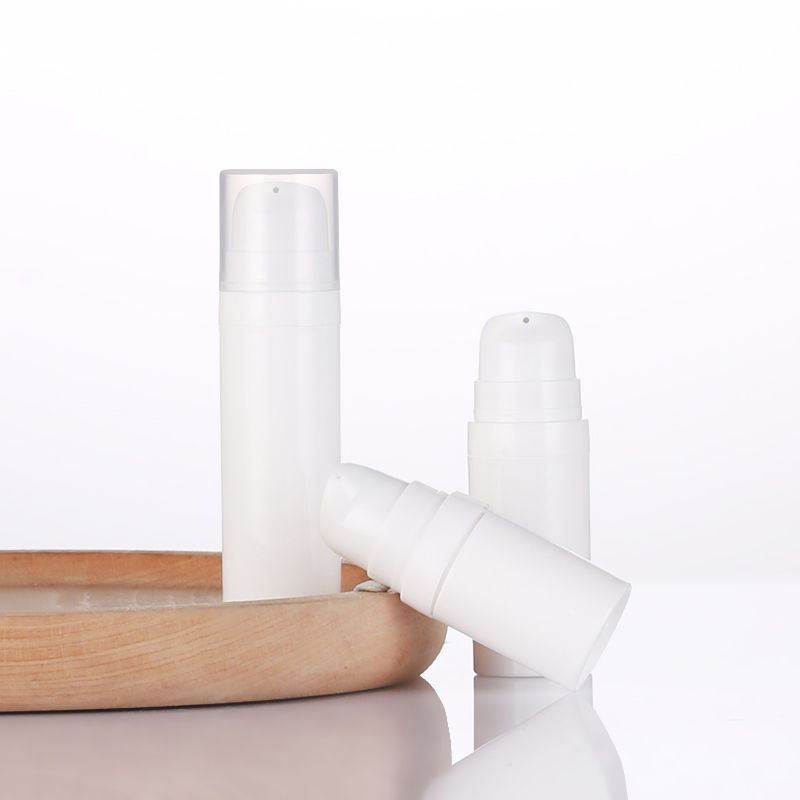
Removable base or top. As covered in the refill steps above, a bottle needs a base or top that can be taken apart without damaging the pump mechanism. A good example is the refillable 15ml acrylic lotion pump airless bottle, which is built specifically around this kind of reuse.
Controlled dosage output. Many airless pump bottles are built to deliver a 0.20cc, 0.5cc, or 1ml output per press, which keeps dosing consistent fill after fill rather than changing as the bottle is refilled over time.
A bottle only qualifies as genuinely refillable when its base, seal, and pump are built to be taken apart and reset, not just dispensed from until empty.
Which Airless Pump Bottle Sizes and Materials Work Best for Refilling?
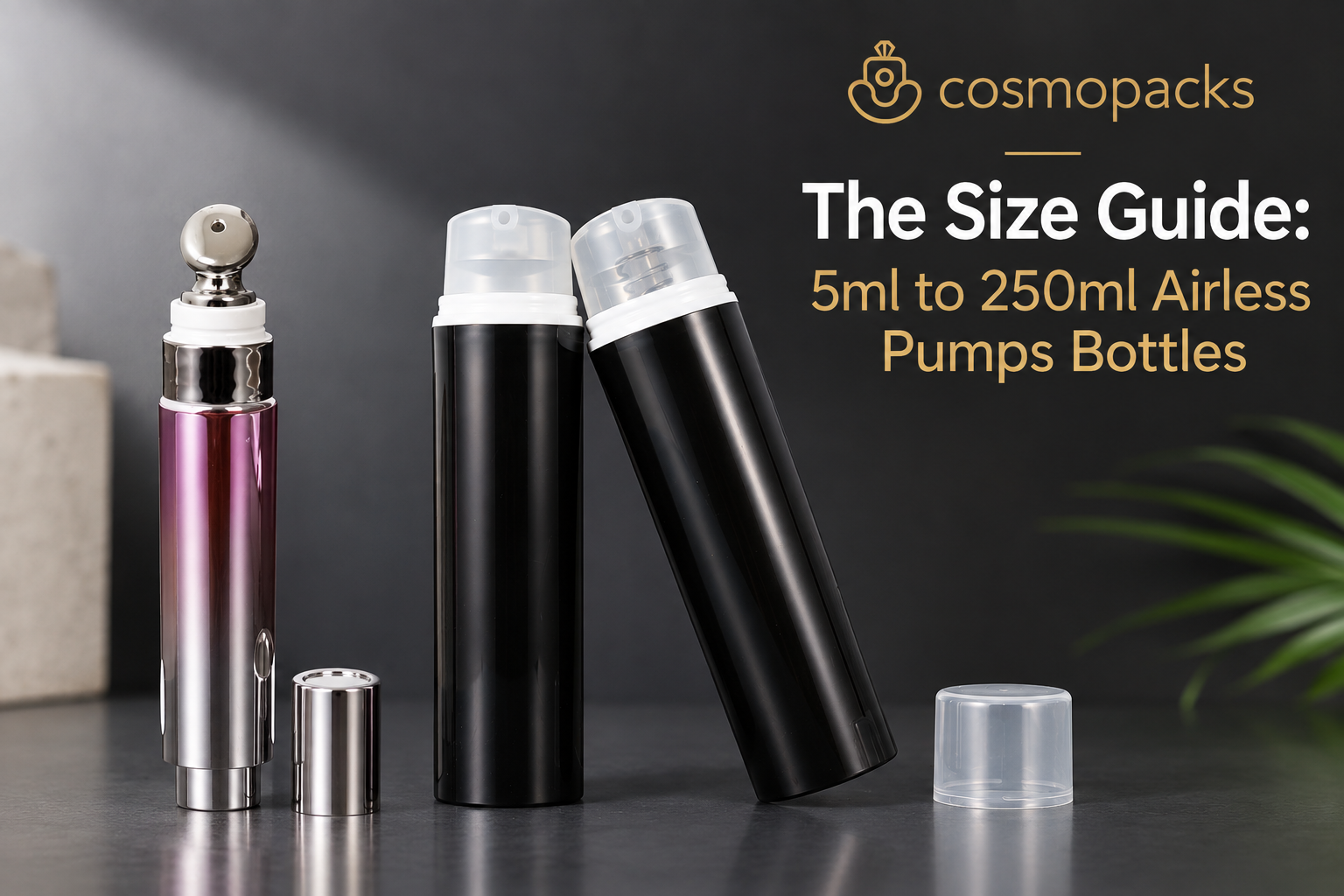
Size and material both affect how practical refilling an airless bottle is in daily use. Cosmopacks produces airless bottles across a range of sizes, from 15ml airless jars with a shiny silver collar up to 150ml large-capacity airless pump containers, and in eco-friendly materials such as polypropylene (PP), PETG, PCR, glass, and acrylic.
| Size | Typical Product | Material Options |
| 15ml | Eye creams, concentrated serums | Refillable acrylic lotion pump |
| 30ml | Serums, essences, treatment lotions | PP airless bottle, acrylic |
| 50ml (1.7oz) | Face lotions, moisturizers, foundations | PP, PETG, acrylic |
| 120ml | Body lotion, larger face creams | 120ml airless lotion bottle |
| 150ml | Large-capacity body care | 150ml airless pump bottle |
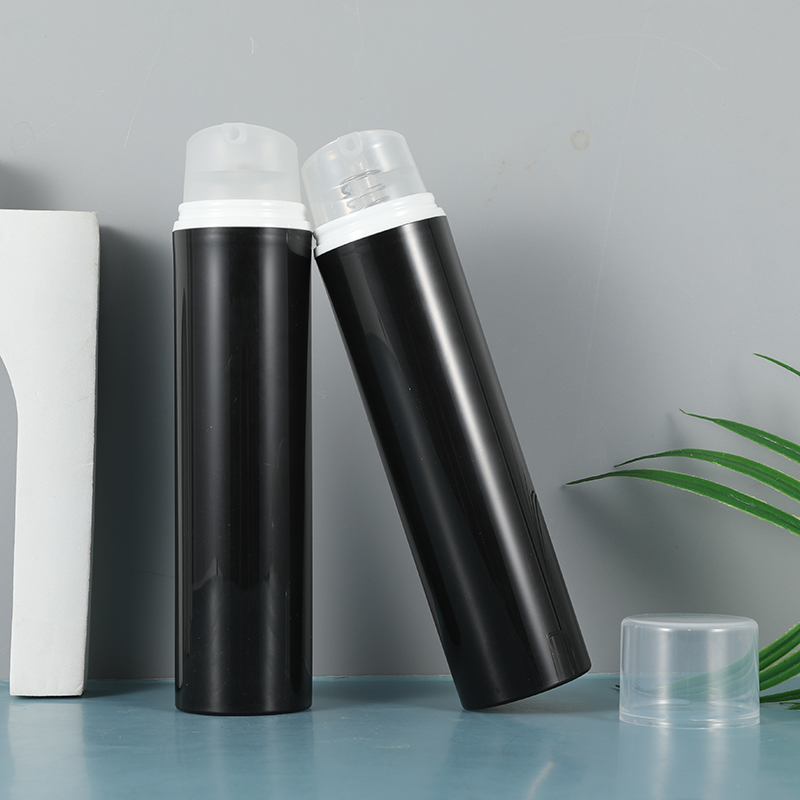
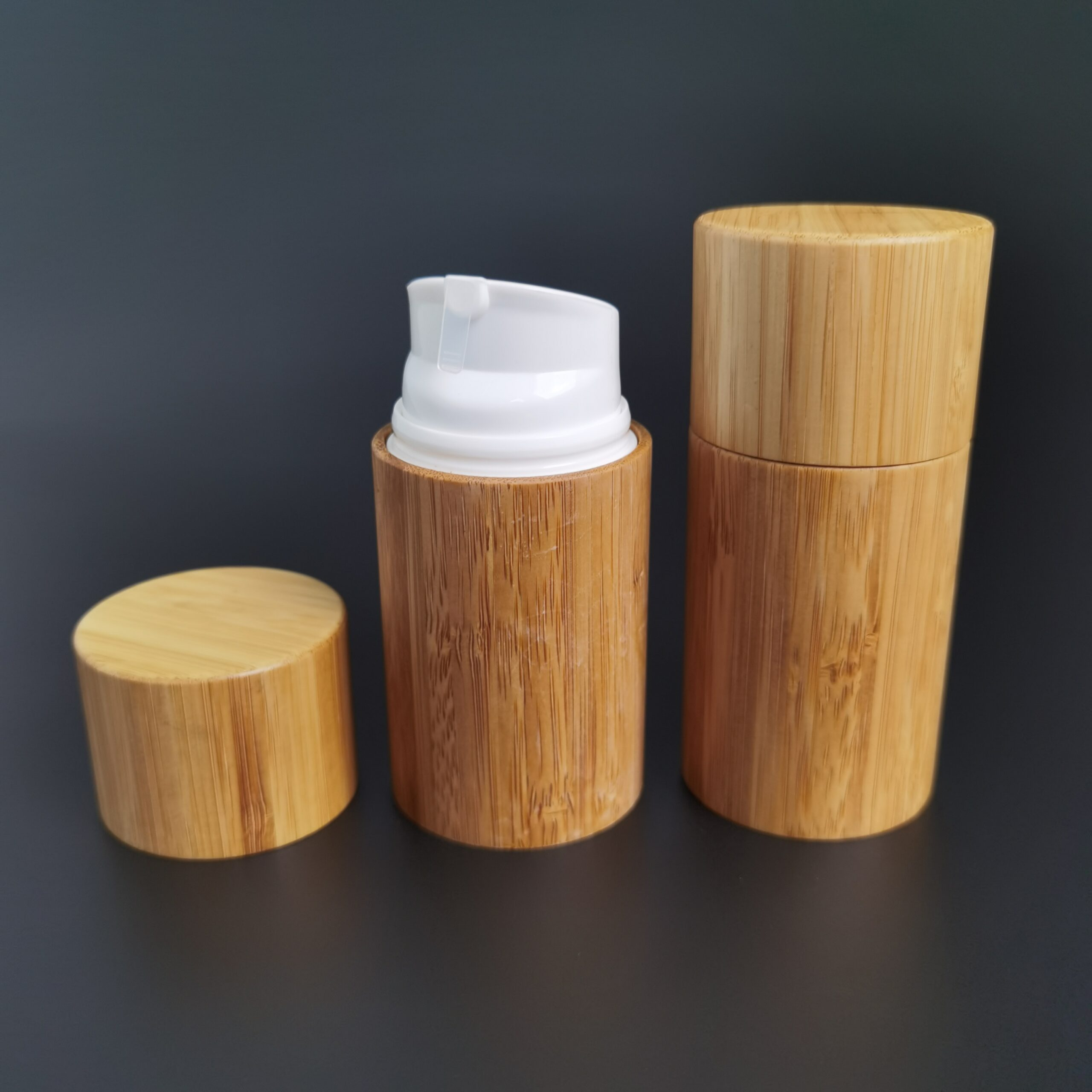
Material also plays a role in how well a bottle holds up to repeated refilling. PP and PETG are lightweight and shatter-resistant, glass airless bottles offer a premium feel for brands that want it, and PCR and bamboo-accented packaging support brands that want a more sustainable refill story alongside the functional one, for example, the PP lotion airless pump bottle with bamboo packaging. A full breakdown of sizing is also covered in the Cosmopacks airless pump bottle sizing guide on the Cosmopacks blog.
How Do Cosmetic Brands Source Refillable Airless Pump Bottles at Wholesale?
When a brand decides to add refillable airless pump bottles to its line, the sourcing process looks different from a one-off retail purchase. Cosmopacks works with cosmetic brands through a structured process built around four stages: Consultation & Communication, Printing & Sampling, Production & Warehousing, and Inspecting & Shipping, with a response from the sales team typically within 8 hours.
Minimum order quantity is often the first question a new brand asks, especially a start-up that isn’t ready to commit to a large run. Cosmopacks sets the minimum order quantity as reasonable as 5,000 units, and for enterprises just starting up, that quantity can be lowered according to the actual situation. This flexible MOQ approach is paired with high customization across size, shape, capacity, color, printing, material, and type, so a refillable airless bottle can be built around a brand’s specific formula and branding rather than a generic shape.
Brands can start this process through the Cosmopacks cosmetic bottle and airless bottle pages, review the full sourcing workflow on the full-service page, or reach out directly through Cosmopacks contact to start a conversation about a specific product.
Sourcing refillable airless packaging at wholesale comes down to matching MOQ, material, and customization options to what the brand’s formula and budget can realistically support.
Why Brands Choose Cosmopacks for Refillable Airless Packaging
Cosmopacks is a wholesale supplier of cosmetic packaging for skincare and body care products, with more than ten years of experience in the cosmetic packaging industry and services provided to more than 100 cosmetic brands worldwide. That history is specific to airless packaging, not cosmetic packaging in general, which matters when a brand is deciding who to trust with a refillable bottle line.
Manufacturing happens at a 12,000-square-meter factory in Shangyu City, Zhejiang Province, China, running more than 30 injection molding machines and producing around 20 million packaging sets annually, with a 98% quality rate maintained through a dedicated QA/QC process. Every airless bottle goes through a QC checklist that includes pressure resistance, deform resistance, and leakage resistance checks before it ships, which is directly relevant to a refillable bottle, since the seal has to hold up to being opened and reset multiple times.
On the sustainability side, Cosmopacks produces packaging using PP, PLA, PCR, and bamboo materials, which supports brands that want their refillable packaging story to carry through to the materials themselves, not just the reuse claim on the label.
For a brand evaluating suppliers, the combination that matters for refillable airless bottles specifically is manufacturing scale, a documented QC process, and direct experience building bottles meant to be taken apart and reused, not just filled once.
Key Takeaways
- Airless pump bottles can be refillable, but it depends on whether the bottle has a removable base or top, not every airless bottle is built for reuse.
- Refilling involves releasing the remaining vacuum, separating the base or inner sleeve, cleaning the chamber in a sterile environment, adding new product, and reseating the pump to reset the seal.
- Airless pumps work by using a vacuum effect, not air exposure, to push product out with each press, which is what protects the formula from oxidation and contamination.
- Double-layered walls, a removable base, and controlled dosage output (0.20cc, 0.5cc, or 1ml) are the features that make a bottle genuinely refillable rather than just airless.
- Cosmopacks supplies refillable airless pump bottles from 15ml up to 150ml, in materials including PP, PETG, PCR, glass, and acrylic, with a flexible minimum order quantity for brands at any stage.
Frequently Asked Questions
- Can all airless pump bottles be refilled? No. Whether an airless pump bottle can be refilled depends on its design and construction. Some have a removable base or top built specifically for refilling, while others are sealed as a single-use design.
- How do I know if my airless bottle is refillable? Check the base and top of the bottle for a removable section. A bottle built for refilling will generally twist, unscrew, or pull apart at the base without needing to be forced open or broken.
- Does refilling an airless pump bottle need any special cleaning? Yes. Refilling should be done in a clean and sterile environment to prevent contamination of the new product, since the inner chamber and pump stem both come into direct contact with the formula.
- What sizes of refillable airless pump bottles does Cosmopacks offer? Cosmopacks produces airless pump bottles from 15ml airless jars up to 150ml large-capacity containers, in materials including PP, PETG, PCR, glass, and acrylic, covering use cases from eye creams to body lotion.
- How can a brand order refillable airless packaging from Cosmopacks? A brand can start through the Cosmopacks airless bottle page or reach out directly through Cosmopacks contact; Cosmopacks sets MOQ as reasonable as 5,000 units and can lower it further for start-up brands.
About the Author
George Lu is the contact person for Cosmopacks, a B2B wholesale supplier of cosmetic packaging for skincare and body care products, based at 46 Country Wood Drive, Pomona, CA 91766, USA, with manufacturing in Shangyu City, Zhejiang Province, China. George works directly with cosmetic brands on sourcing and customizing packaging, including airless bottles, cosmetic tubes, and cosmetic jars, through the Cosmopacks full-service process. Learn more about Cosmopacks, browse the Cosmopacks blog and FAQs, or reach the team directly at george@cosmopacks.com or +1 626 203 5398.