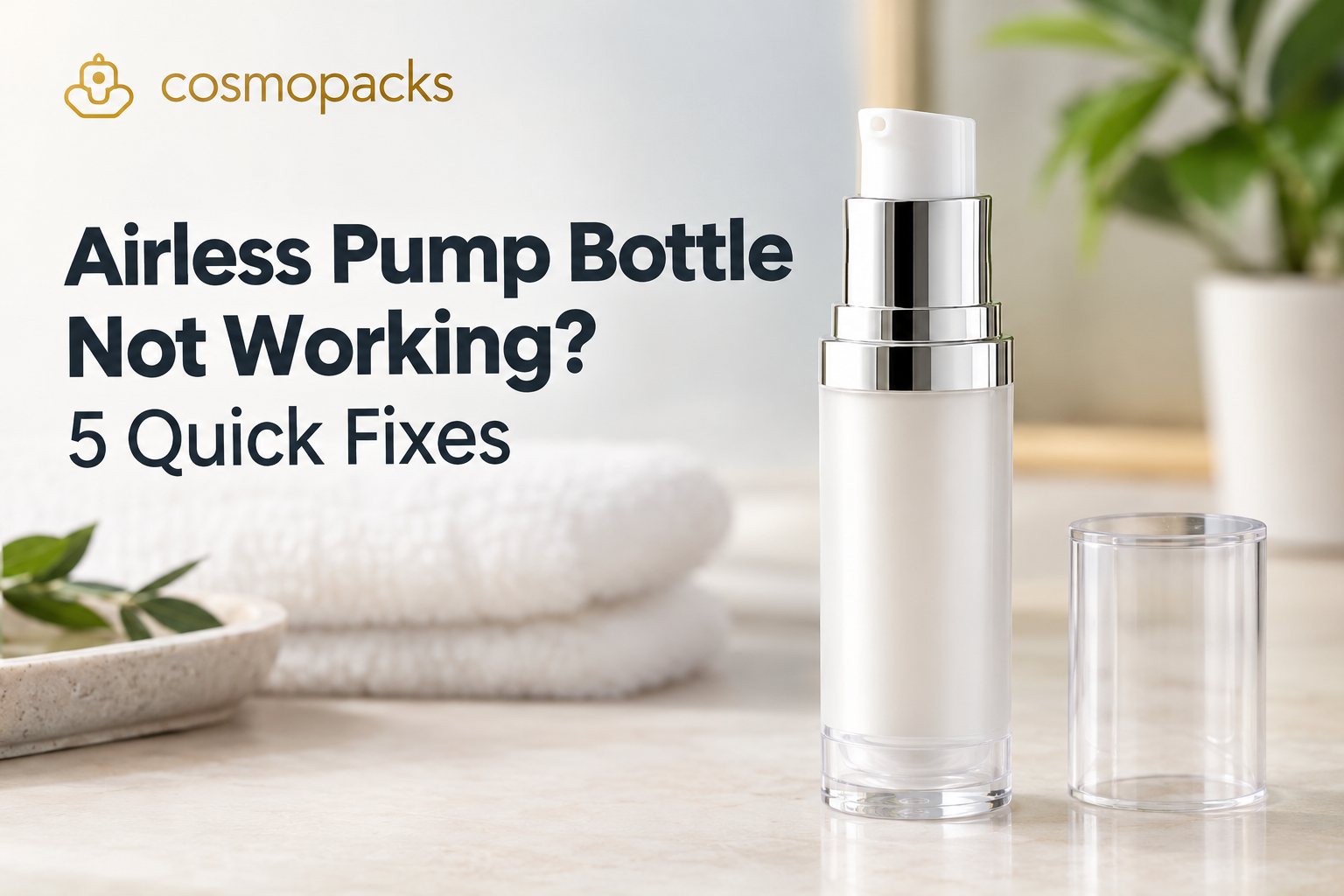
If your airless pump bottle stopped dispensing, the cause is almost always one of five things: a clogged nozzle, product that’s too thick for the pump, the vacuum seal being broken, the bottle not being primed after filling, or the piston getting stuck. Once you know which one you’re dealing with, most airless pump bottles can be fixed in under five minutes without tools. I’ve walked dozens of skincare brands through this exact troubleshooting over the years at Cosmopacks, and it’s almost never the bottle that’s broken, it’s usually one small thing standing between the pump and the product.
Why Is My Airless Pump Bottle Not Working?
A few years ago, a small skincare brand out of Southern California called our office because an entire batch of their 30ml airless pump bottles had “stopped working” right after filling. They were convinced the whole order was defective and were ready to ask for a replacement shipment. Before we shipped anything, I asked them to walk me through exactly what they’d done, and it turned out the answer was simpler than anyone expected.
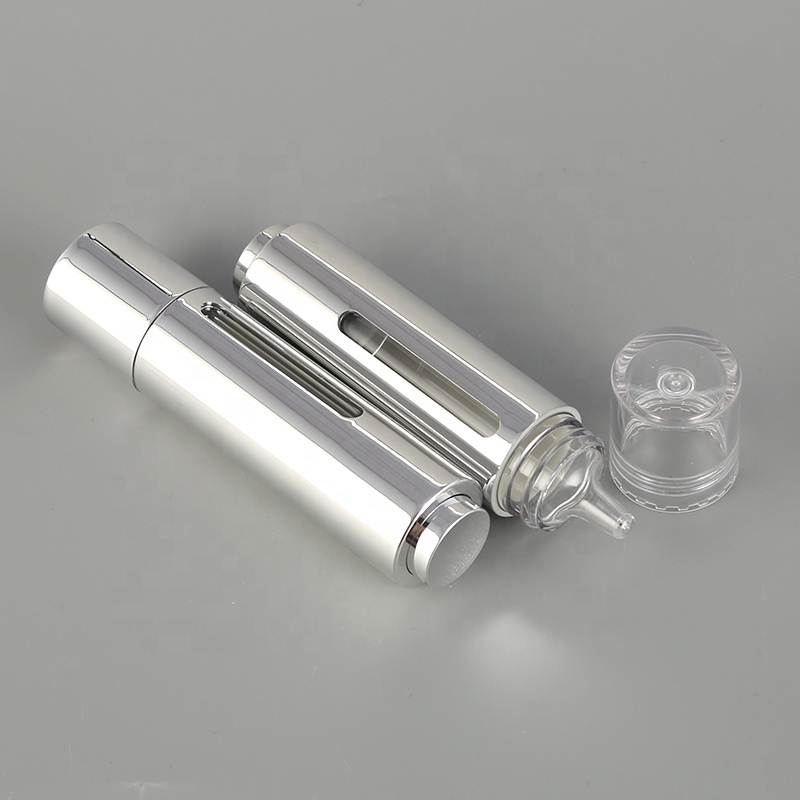
An airless pump bottle works by using a vacuum effect: when you press the pump, air pressure inside the bottle drops, and that pressure difference pushes the product up through a small opening and out of the nozzle. There’s no dip tube pulling from the bottom the way there is in a regular spray bottle, the base of the container actually rises as product is used, which is what keeps air from ever touching what’s left inside. When that vacuum system isn’t set up correctly, or when something physically blocks the opening, the pump will feel like it’s doing nothing at all.
In that client’s case, the bottles had never been primed. New airless pump bottles need several pumps before product starts flowing, especially once they’ve just been filled, because air still needs to be pushed out of the pump mechanism itself. Once we had them prime each bottle with 8–10 pumps, all of them worked fine.
An airless pump bottle relies on internal air pressure, not gravity, so if that pressure system is interrupted at any point, the pump will stop dispensing even though nothing is actually broken.
Fix 1: Prime the Airless Pump Bottle Before You Judge It as Broken
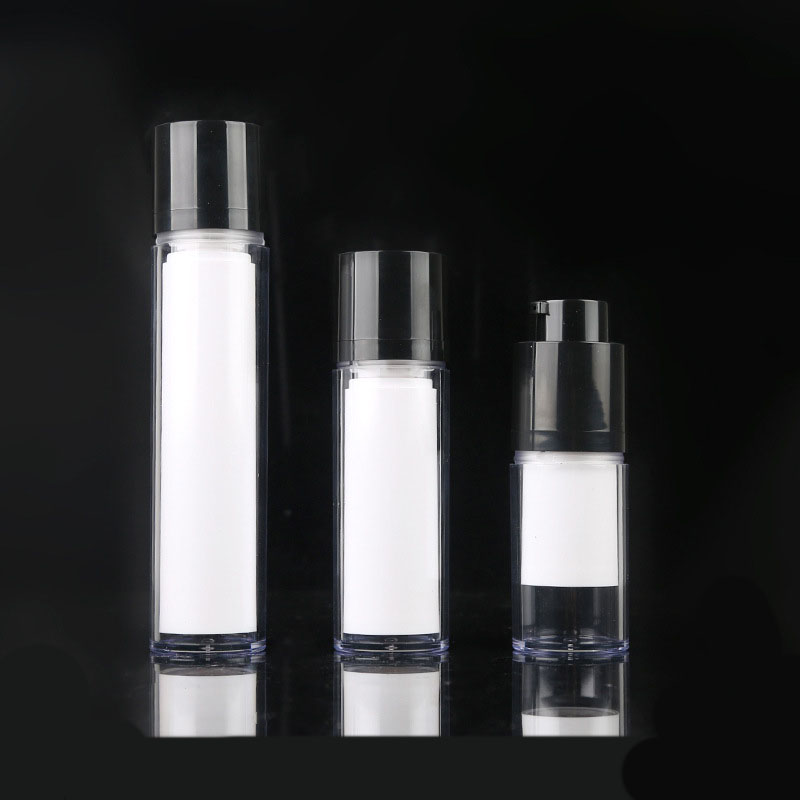
This is the fix I recommend checking first, every time, because it solves the majority of “my airless pump bottle isn’t working” calls we get.
- Press the pump head down fully 8 to 10 times in a row.
- Watch for the base of the bottle to start rising slightly, that’s a sign the vacuum is engaging.
- If nothing comes out by the 10th pump, move to the next fix rather than repeating this indefinitely, since forcing it repeatedly can strain the pump mechanism.
New bottles, refilled bottles, and bottles that have been stored empty for a while all need this same priming step. It’s not a defect, it’s just part of how the airless pump bottle is designed to work.
Fix 2: Clear a Clogged Airless Pump Bottle Nozzle
The second most common issue is dried product blocking the small dispensing opening at the tip of the pump. This happens more with thicker creams and serums that have sat unused for a few weeks.
- Remove the pump head or cap, if the design allows it.
- Rinse the nozzle opening under warm water to loosen dried residue.
- Use a clean, dry cotton swab to gently clear the opening rather than a sharp object, which can distort the small aperture and affect the dose.
- Let the nozzle air-dry fully before reattaching it, since trapped moisture can affect the next few pumps.
If you use your airless pump bottle daily, this almost never happens. It’s mostly an issue with bottles that get set aside for travel or seasonal products and picked back up later.
Fix 3: Match the Product Viscosity to What the Pump Was Built For
Not every airless pump bottle is built the same way inside, and one of the more overlooked reasons a pump “stops working” is that the product inside is simply too thick, or too thin, for that specific pump’s design.
At Cosmopacks, our advanced pumping system is built to dispense highly viscous liquids, accounting for up to 95% of the total filling liquid, while minimizing waste, and we offer controlled dosage options such as 0.20cc, 0.5cc, and 1ml output depending on the product. A pump engineered for a lightweight serum will struggle with a dense, heavy cream, and the reverse is also true. This is exactly why our team works with brands on pump selection during the OEM/ODM process rather than treating all pumps as interchangeable.
If an airless pump bottle pumps air but no product, the mismatch between the formula’s thickness and the pump’s dosage design is one of the most common, and most overlooked, explanations.
Fix 4: Check for a Broken Vacuum Seal on the Airless Pump Bottle
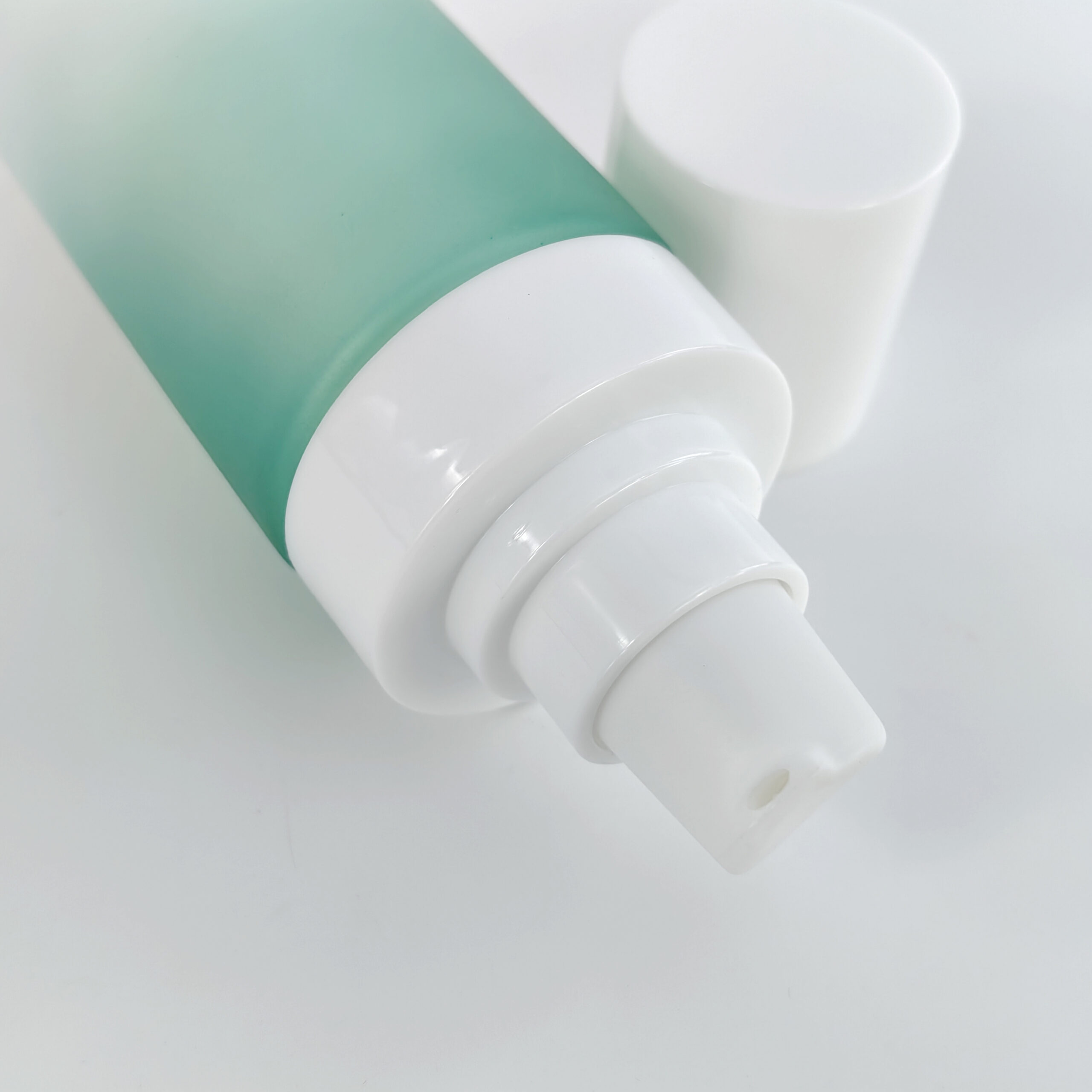
Airless bottles depend on an airtight seal between the inner wall and the rising base or piston. If that seal is compromised, even briefly, the vacuum effect can’t build up enough pressure to push product upward.
A broken seal is usually caused by one of these:
| Cause of Seal Failure | What Typically Happens | How to Address It |
| Bottle dropped or knocked while full | Piston shifts slightly out of alignment | Gently press the base evenly to reseat it |
| Cap left off for an extended time | Air enters and disrupts internal pressure | Re-prime with several full pumps |
| Bottle overfilled past capacity | No room for the piston to move upward | Refill to the correct fill line only |
| Pump twisted or removed forcefully | Seal ring gets misaligned | Reinsert the pump head straight, without twisting |
Our airless bottles are built with double-layered acrylic walls specifically to create a more sterile, stable environment and to add durability against everyday handling, but no airless system is completely immune to a hard drop or an overfilled chamber.
Fix 5: Know When It’s the Piston, Not You
Occasionally, the piston or gasket inside the bottle itself gets physically stuck, usually from product residue building up along the inner wall over time, especially with bottles that are refilled repeatedly without being cleaned in between.
- Empty the bottle as much as possible.
- Rinse the interior with warm water, then let it dry completely upside down.
- Reinsert the pump and prime it again before adding new product.
- If the piston still won’t move freely after cleaning, the bottle has likely reached the end of its usable life and should be replaced rather than forced.
This is far more common with bottles that have been reused many times past their intended cycle than with new ones, which brings up a question I get asked constantly.
How Do I Reset an Airless Pump Bottle?
“Resetting” an airless pump bottle really just means clearing out any trapped air or leftover product and re-priming it from scratch. Empty the bottle completely, rinse the inside with warm water, dry it fully, then pump the empty mechanism several times before refilling. This clears any residue in the pump channel and lets the vacuum system start fresh, which solves the reset request in almost every case we’ve handled.
How Do You Fix a Pump Bottle That Won’t Pump?
If a pump bottle won’t pump at all, the fastest path is to work through the fixes in order: prime it first, check the nozzle for buildup, confirm the product isn’t too thick for that particular pump, inspect the seal for damage from a drop or overfilling, and finally check whether the piston itself has become stuck from residue. In our experience supplying airless pump bottles to more than 100 cosmetic brands worldwide, working through these steps in this order resolves the overwhelming majority of “won’t pump” cases without needing a replacement bottle.
Can I Reuse an Airless Pump Bottle?
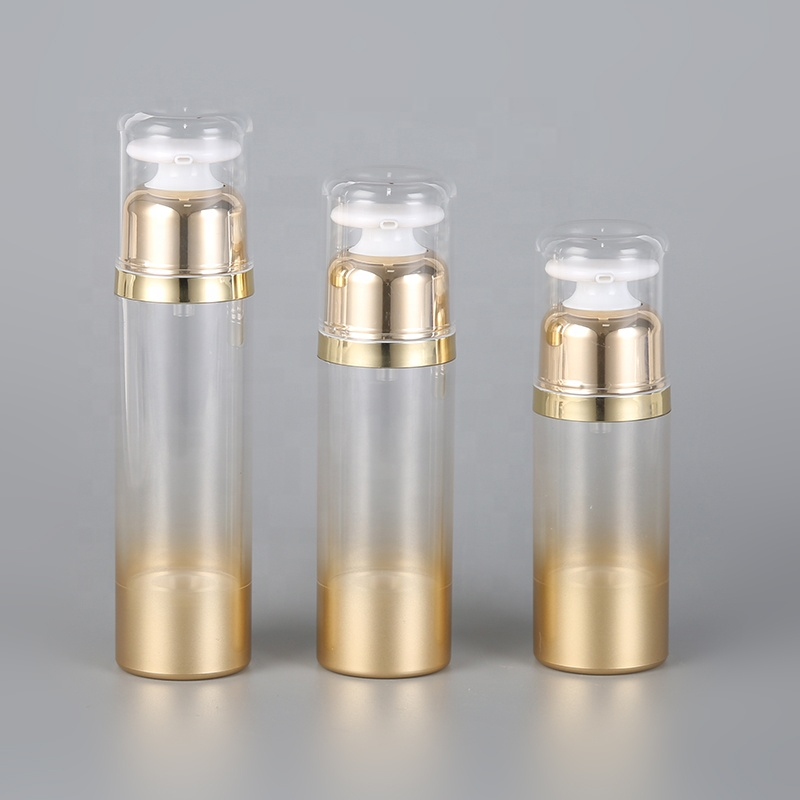
Yes, refillable airless pump bottles are specifically designed to be reused, and doing so is one of the more sustainable habits a skincare brand or individual user can build into their routine. Reuse works best when the bottle is rinsed and fully dried between fills, refilled to the correct line rather than overfilled, and re-primed with several pumps before the first use of the new product. Reusing a well-made airless pump bottle reduces packaging waste while keeping the product protected from air and contamination, which is the entire point of airless design in the first place.
A Real Example: What Happened With the 30ml Batch
Going back to that Southern California brand, once we walked through priming on a call together, every single bottle in their 30ml order worked exactly as it should have. No replacements were needed, and the client ended up reordering the same 30ml airless pump bottles for their next two product launches. It’s a small story, but it’s representative of most “broken bottle” calls we take at Cosmopacks: the packaging is doing its job, it just needs to be introduced to the product correctly.
If you’re choosing a size for a new product line and want to understand how capacity affects dosage and pump behavior, our guide on airless pump bottle sizes from 15ml to 100ml breaks down how each size is typically used. And if the pump is working fine but you’re struggling to get the cap or collar open, our separate guide on how to open an airless pump bottle when it won’t budge covers that specific issue in detail.
Why This Matters for Cosmetic Brands, Not Just Individual Users
For a brand ordering airless pump bottles wholesale, a pump that seems “not to work” straight out of the box can feel like a serious quality issue, especially before a product launch. In practice, our experience across cosmetic bottle packaging projects has shown that the vast majority of these cases trace back to priming, viscosity mismatch, or handling during filling, not a defect in the bottle itself. That’s part of why Cosmopacks works directly with brands during design and filling trials, so the pump, the formula, and the bottle are matched correctly before a full production run goes out.
Our airless bottles use materials like PP, PETG, PCR, glass, and acrylic depending on the product and brand needs, and every batch goes through inspection for pressure resistance, deform resistance, and leakage resistance before it ships. That doesn’t mean issues never happen, it means that when they do, there’s almost always a simple, identifiable reason behind it.
Key Takeaways
- Prime first. Most “not working” airless pump bottles just need 8–10 full pumps before product flows, especially after filling.
- Check the nozzle. Dried product is a common blockage, especially in bottles that sit unused for weeks.
- Match viscosity to the pump. A pump built for a thin serum won’t handle a dense cream well, and vice versa.
- Inspect the seal. Drops, overfilling, and forceful twisting can all break the vacuum seal that makes airless pumps work.
- Reuse responsibly. Refillable airless pump bottles can be reused many times as long as they’re cleaned, dried, and re-primed between fills.
Frequently Asked Questions
- Why is my airless pump bottle not working right after I filled it?
It almost certainly just needs priming. Press the pump 8–10 times to push trapped air out of the mechanism before product starts flowing. - How do I reset an airless pump bottle?
Empty it, rinse and fully dry the inside, then pump the empty bottle several times before refilling to clear any residue from the channel. - How do you fix a pump bottle that won’t pump?
Work through it in order: prime it, clear the nozzle, check whether the product is too thick for the pump, inspect the seal, and check the piston for buildup. - Can I reuse an airless pump bottle?
Yes, refillable airless pump bottles are made for reuse, just clean, dry, and re-prime between fills. - What if none of these fixes work?
If the piston is visibly stuck even after cleaning, or the seal is clearly damaged, the bottle has likely reached the end of its usable life and should be replaced.
For brands looking to source or troubleshoot airless pump bottles for a new product line, you can browse Cosmopacks’ full airless bottle collection, read more on the Cosmopacks blog, check our FAQs page, or reach out directly through our contact page.
About the Author
George Lu is the contact lead at Cosmopacks, a B2B wholesale supplier of cosmetic packaging for skincare and body care brands, based at 46 Country Wood Drive, Pomona, CA 91766, USA, with manufacturing based in Shangyu City, Zhejiang, China. George works directly with cosmetic brands on packaging selection, pump compatibility, and order fulfillment. He can be reached at george@cosmopacks.com or +1 626 203 5398.