
A few years ago, a small skincare brand reached out to us in a panic. Their new serum had just launched. The formula was stable. The branding looked sharp. But within days, customer emails started coming in with the same complaint: “The pump doesn’t work.”
Nothing rattles a brand faster than packaging problems after launch. The product inside might be excellent, but if the airless pump bottle fails, customers lose trust quickly. Returns pile up. Reviews turn sour. And suddenly the packaging choice, which seemed like a smart upgrade, feels like a liability.
If you have ever asked yourself, “Why is my airless pump bottle not working?” you are not alone. This is one of the most common questions we hear from skincare and cosmetic brands, especially those new to airless bottles.
Let’s talk through why this happens, what an airless pump bottle actually is, where things usually go wrong, and how brands can avoid these issues from the start. This is not theory. This comes from years of supplying airless pump bottles for cosmetics and working directly with brands, fillers, and formulators across North America, Europe, and Australia.
What Is an Airless Pump Bottle, Really?
Before getting into problems, it helps to ground ourselves in how airless bottles actually work.
An airless pump bottle is designed to dispense product without letting air back into the container. Instead of a traditional dip tube, it uses a vacuum system. When you press the pump, the product is pushed upward by a movable piston or internal disc. As product leaves the bottle, the base rises, keeping the remaining formula sealed off from oxygen and bacteria.
This is why skincare packaging airless bottles are so popular for serums, foundations, anti-aging creams, and treatments with sensitive ingredients. Less air exposure means less oxidation, fewer preservatives, and a longer shelf life.
In theory, airless packaging is simple. In practice, small mistakes in design, filling, or usage can cause big headaches.
The First Time an Airless Pump “Fails” Is Usually Not a Defect
This may surprise you, but most airless pump bottle complaints are not caused by manufacturing defects.
They usually fall into one of three buckets:
- The pump was never primed correctly
- The formula is not compatible with the pump system
- The bottle was filled or handled improperly
Understanding these early can save brands a lot of frustration.
“The Pump Isn’t Working” (But It Has Never Been Primed)
This is the most common scenario, especially for first-time users.
Airless pumps do not always dispense product immediately. When new, there is often trapped air inside the pump chamber. Until that air is expelled, the vacuum cannot form properly.
From a consumer’s perspective, it feels broken. They press the pump five times, nothing happens, and they assume something is wrong.
From a technical perspective, the pump just hasn’t been primed.
How Brands Can Avoid This
There are a few simple ways to reduce this issue:
- Prime the pumps during filling when possible
- Include basic usage instructions on packaging or inserts
- Train customer service teams to explain priming clearly
Some brands even test a few pumps before shipping to ensure smoother first use. This adds a small step in production but prevents a lot of unhappy emails later.
As a cosmetic airless pump bottle supplier, we often recommend brands think beyond the bottle itself and consider the end user experience. Packaging is not just about containment. It is about interaction.
The Formula Is Too Thick or Too Thin
Airless pump bottles are versatile, but they are not universal.
A foundation, a lightweight serum, and a thick balm behave very differently inside a pump system. If the viscosity is outside the pump’s tolerance range, performance issues show up fast.
Common symptoms include:
- Pump feels stiff or hard to press
- Product dispenses unevenly
- Pump works for a few uses, then stops
This does not mean airless bottles are unreliable. It means the pump output and internal design need to match the formula.
At Cosmopacks, we often talk through dosage options early. Outputs like 0.20cc, 0.5cc, or 1ml are not just numbers. They determine how well a formula flows and how controlled the dispensing feels.
This is where experience matters. A supplier who understands airless pump bottles for cosmetics will ask about formulation details upfront, not after problems appear.
Improper Filling Techniques
Airless bottles demand more precision during filling than traditional lotion bottles.
If the bottle is underfilled, the piston may not engage properly. If it is overfilled, pressure builds and affects pump performance. Air bubbles introduced during filling can also disrupt the vacuum effect.
These issues often show up weeks later, which makes them harder to trace back to the filling stage.
What Experienced Brands Do Differently
Brands that work closely with their packaging supplier and filling partner tend to:
- Follow recommended fill volumes closely
- Avoid high-speed filling that introduces air
- Test filled units after resting, not just immediately
This is where full-service support matters. Cosmopacks’ full-service capabilities are designed to reduce these disconnects between design, production, and real-world use.
When packaging, filling, and QA teams are aligned, problems decrease dramatically.
Temperature and Storage Conditions
This is less talked about, but it matters.
Airless pump bottles rely on pressure balance. Extreme temperature changes during shipping or storage can affect internal pressure and piston movement.
For example:
- Cold temperatures can thicken formulas temporarily
- Heat can expand internal air pockets
- Long transit times amplify these effects
Brands shipping internationally, especially across North America, Europe, and Australia, should factor this into packaging decisions.
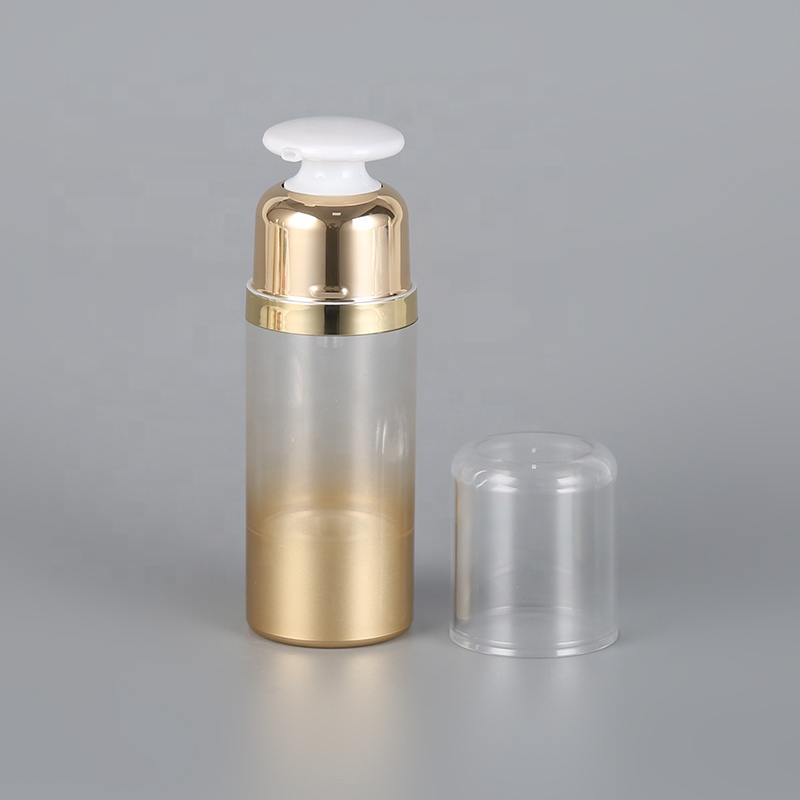
Double-layered walls, opaque finishes, and durable materials help stabilize performance. Acrylic double-wall airless bottles are a popular choice for this reason, combining structure with visual appeal.
Customers Trying to Open or Refill the Bottle Incorrectly
Airless bottles are often refillable, but not all are designed for easy consumer refilling.
Some users try to pry open the pump, twist components, or force the base downward. Once that seal is broken incorrectly, the vacuum system may never recover.
This often leads to “It worked fine until I tried to refill it” complaints.
Setting the Right Expectations
If refillability is a selling point, the bottle design must support it clearly. If not, brands should be upfront that the packaging is not meant to be opened by consumers.
Clear communication avoids misuse. A short instruction note can protect both the product and your reputation.
If sustainability is part of your brand story, refillable and recycled options are worth exploring carefully:
recycled-bottle
Sustainability
Cosmetic-bottle
Why Airless Bottles Are Still Worth It
After all this, it is fair to ask: if airless pump bottles can be finicky, why do so many brands choose them?
Because when done right, they solve more problems than they create.
Airless bottles:
- Extend shelf life by limiting oxidation
- Reduce contamination risk
- Minimize product waste
- Allow precise dosing
- Elevate perceived product value
For premium skincare and treatment products, traditional packaging often falls short. Airless packaging aligns better with modern formulations and consumer expectations.
This is why many brands combine airless bottles with complementary packaging like cosmetic jars, tubes, and makeup packaging for a cohesive line:
cosmetic-jar
cosmetic-tube
Makeup-packaging
Lean-manufacturing
The Supplier Makes a Bigger Difference Than the Bottle Itself
One hard truth: two airless pump bottles that look identical can perform very differently.
Material quality, pump engineering, QA standards, and production consistency matter more than most brands realize. This is where working with an experienced cosmetic packaging supplier becomes critical.
Cosmopacks has spent more than a decade supplying airless bottles wholesale to over 100 cosmetic brands worldwide. That experience shows up not just in the product, but in the guidance brands receive before problems happen.
Real-World Lessons Brands Learn the Hard Way
Most brands that run into airless pump issues share a similar path.
They choose airless packaging late in development.
They assume all airless bottles function the same.
They focus on appearance before compatibility.
Then problems surface after launch, when fixes are expensive.
Brands that succeed do the opposite. They:
- Choose packaging early
- Share formula details with suppliers
- Test before committing to volume
- Think about the end user experience
These steps are not complicated. They just require foresight and the right partner.
When an Airless Pump Bottle Truly Is Defective
Defects do happen. No manufacturing process is perfect.
But when quality control is strong, defect rates stay low and issues are handled quickly. Well-trained QA and QC staff make a real difference here, especially in high-volume wholesale production.
At Cosmopacks, quality checks are built into every stage, from material selection to final inspection. This reduces surprises for brands and protects long-term relationships.
How to Know If Airless Packaging Is Right for Your Product
If you are unsure whether an airless pump bottle fits your product, ask yourself:
- Is the formula sensitive to air or bacteria?
- Does precise dosing matter?
- Is product waste a concern?
- Does the packaging need to feel premium?
If the answer is yes to most of these, airless packaging is probably worth considering. If not, traditional cosmetic bottles or jars may be a better fit.
Final Thoughts: Avoiding Problems Is Easier Than Fixing Them
When an airless pump bottle is not working, it feels like a failure. But in most cases, it is a signal that something earlier in the process was overlooked.
The good news is that nearly all common airless bottle issues are preventable. With the right design choices, filling practices, and supplier support, airless packaging becomes one of the most reliable and brand-enhancing options available.
If you are planning a new product launch or rethinking your packaging strategy, it helps to talk with people who have seen these issues play out in the real world.
You can learn more about Cosmopacks’ airless packaging solutions, request a quote, or start a conversation here: contact