The first time a skincare founder asked me why her serum kept oxidizing before customers finished the bottle, she assumed the formula was the problem. It wasn’t. The issue was packaging. She was using a standard pump bottle that pulled air back inside with every press. The product worked beautifully in the lab, but the moment it hit real-world use, oxygen and bacteria slowly did their damage.
That conversation is one many cosmetic brands eventually have. Somewhere between product development and market growth, packaging stops being an afterthought and becomes a strategic decision. Airless pump bottles often enter the picture at that point, not because they look sleek, but because they solve real, expensive problems.
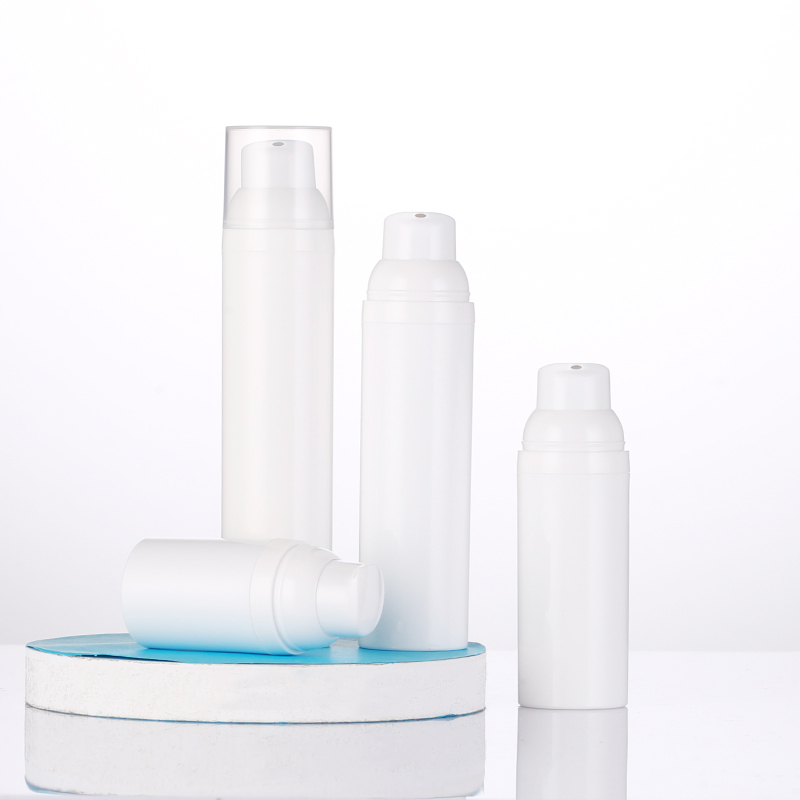
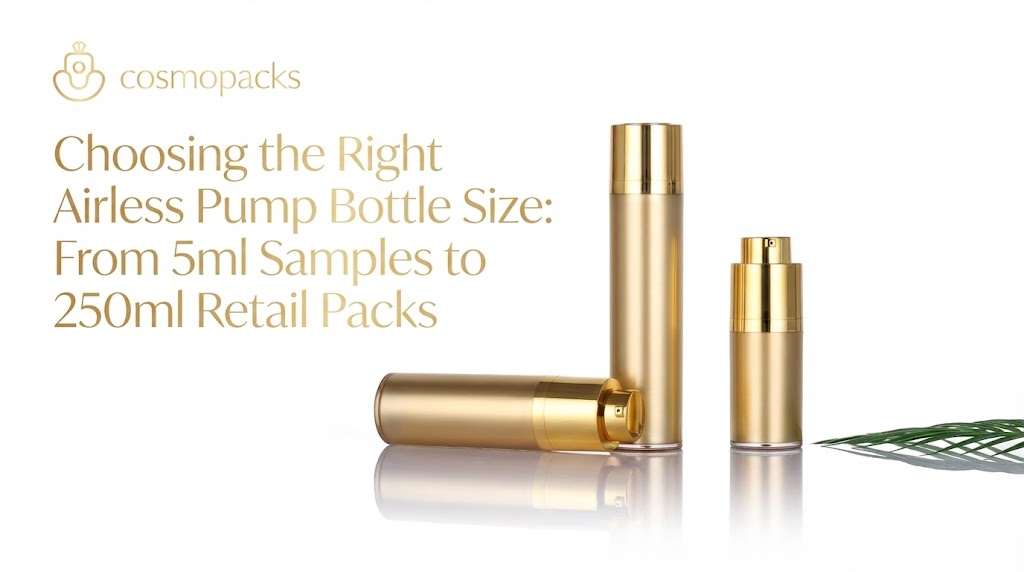
Choosing the right airless pump bottle size is part of that decision. It affects how customers experience your product, how long it stays effective, how much waste is left at the bottom, and even how your brand is perceived on a shelf or in someone’s bathroom. From tiny 5ml samples to 250ml retail packs, each size serves a different purpose. Picking the wrong one can quietly undermine a good product.
This guide walks through how experienced brands think about airless bottle sizing, based on real use cases, production realities, and what actually happens once products leave the warehouse.
What Is an Airless Pump Bottle, Really?
Before getting into sizes, it helps to clarify what an airless pump bottle actually is. The term gets used loosely, but the function matters.
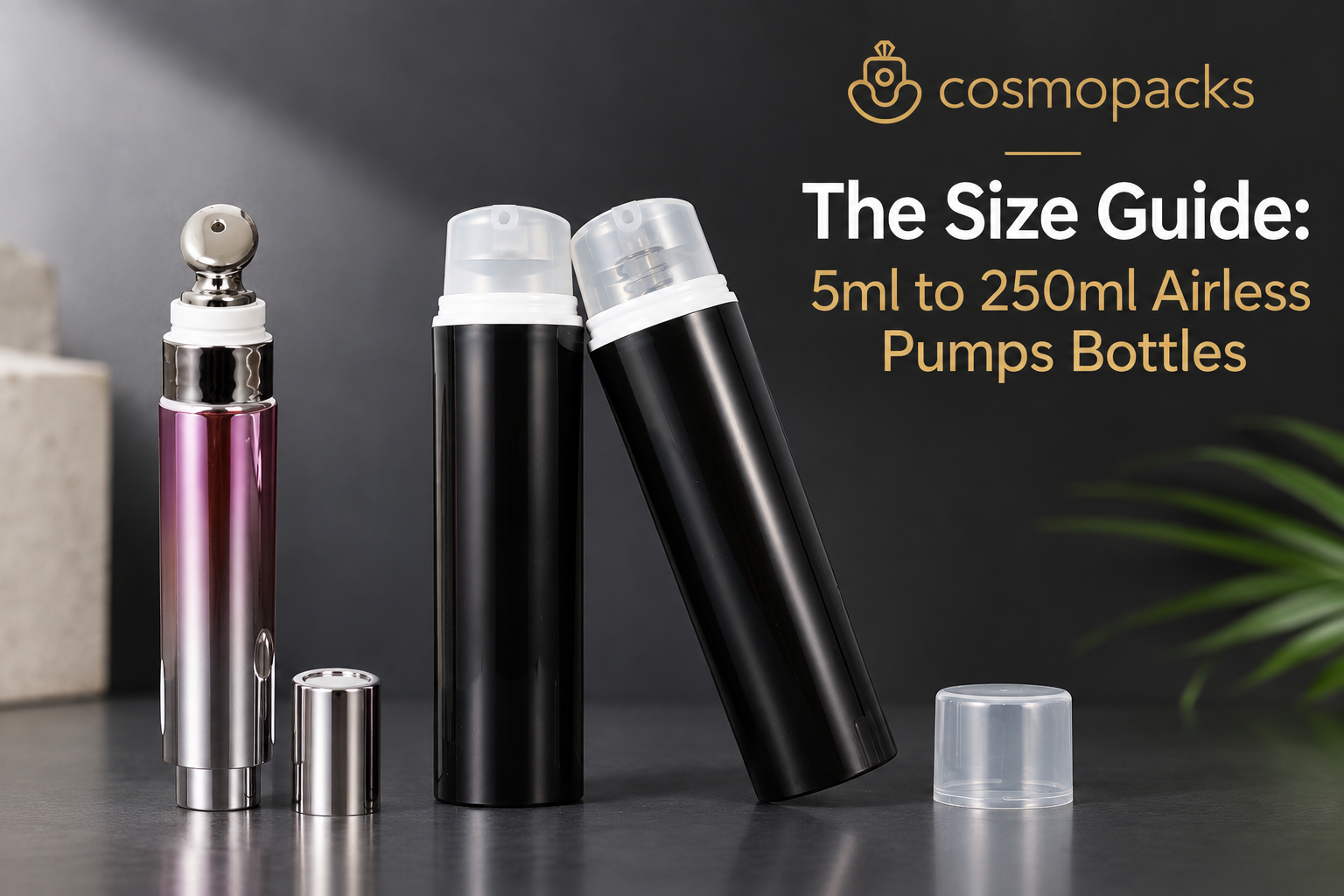
An airless pump bottle is a dispensing system designed to prevent air from entering the container as product is used. Instead of a dip tube pulling product up, the system relies on a vacuum effect or a rising piston at the base. Each press delivers a controlled dose while the interior remains sealed.
For skincare and cosmetic brands, this matters for a few reasons:
- Reduced oxidation of active ingredients
- Lower risk of contamination
- Longer shelf life without relying on heavy preservatives
- More consistent dosing for the end user
- Minimal product waste, often above 95 percent evacuation
Airless pump bottles for cosmetics are especially common for serums, eye creams, foundations, anti-aging treatments, and medical-grade creams, where stability and hygiene are non-negotiable.
At Cosmopacks, airless bottles are built with these exact concerns in mind. The designs focus on air insulation, double-layered walls, and controlled dispensing outputs such as 0.2cc, 0.5cc, or 1ml per pump, depending on product needs. These details shape how different sizes perform in real use.
Why Size Matters More Than Most Brands Expect
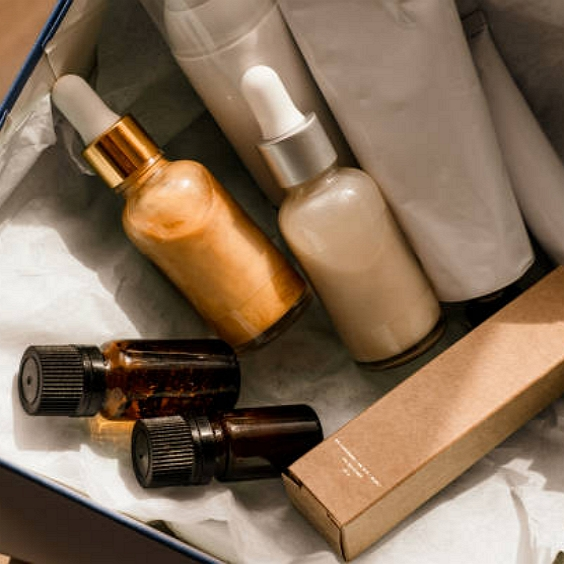
It is tempting to choose a bottle size based purely on how much product you want to sell. But experienced brands look deeper.
Bottle size influences:
- How often a customer uses the product
- Whether the product feels premium or disposable
- How well the pump performs over time
- Shipping and storage costs
- Regulatory labeling and travel compliance
- Sampling and conversion strategies
A 30ml airless pump bottle and a 50ml one may look similar on a shelf, but they create very different user behaviors. The same goes for a 5ml sample compared to a 15ml travel size.
Cosmopacks works with brands across North America, Europe, and Australia, and one pattern shows up again and again. Brands that align bottle size with real usage patterns tend to see fewer returns, better reviews, and stronger repeat purchases.
5ml Airless Pump Bottles: Small Size, Big Strategic Value
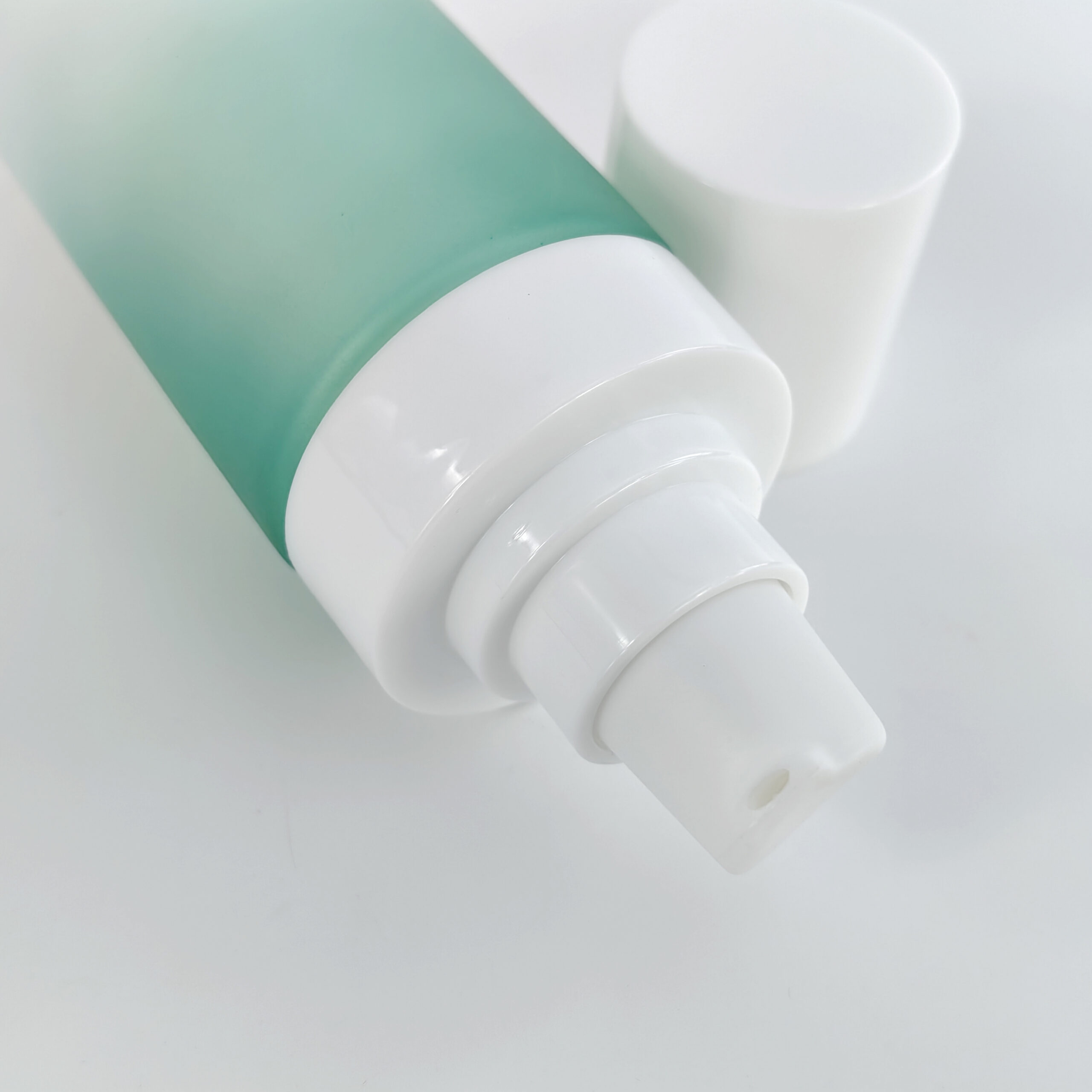
A 5ml airless pump bottle is not designed to generate profit on its own. Its value lies elsewhere.
Where 5ml Bottles Make Sense
- Product sampling for retail or direct-to-consumer campaigns
- Influencer mailers and press kits
- Dermatology or clinic-based product trials
- High-potency formulas where only small amounts are needed
Airless bottles at this size protect formulas just as effectively as larger versions. That matters when you are sampling products with sensitive actives like vitamin C, retinol, or peptides. A compromised sample can quietly damage your reputation before a customer ever buys full size.
Common Mistake with 5ml Sizes
Some brands try to cut costs by using standard jars or mini tubes for samples. The problem is inconsistency. The sample does not reflect the real product experience. When customers later buy the full-size airless bottle, it feels different.
Using a 5ml airless pump bottle maintains consistency. The dispensing feel, hygiene, and protection all match the retail product.
At Cosmopacks, small-format airless bottles are often used as part of a larger packaging strategy, not standalone items. They help brands test markets without compromising quality.
10ml to 15ml Airless Pump Bottles: Travel, Eye Care, and Precision Products
This size range is where airless packaging starts pulling real weight.
Typical Uses
- Eye serums and eye creams
- Targeted treatments like spot correctors
- Travel-size versions of bestsellers
- Premium formulations sold in small quantities
Eye products, in particular, benefit from airless pump bottles in the 10ml to 15ml range. They require hygienic application, controlled dosing, and protection from contamination. A double-layered acrylic airless bottle adds durability while giving a premium look.
Cosmopacks offers 15ml eye serum airless bottles that balance functionality and aesthetics. Brands often choose opaque or frosted finishes here to protect light-sensitive formulas and reinforce a luxury feel.
Why Not Go Smaller?
Below 10ml, pump performance becomes more sensitive. The internal tolerances must be precise. Choosing a reliable supplier matters more than ever. This is one reason brands working at small volumes often prefer wholesale airless pump bottles from experienced manufacturers rather than generic options.
30ml Airless Pump Bottles: The Industry Standard for Serums
If there is a default size for airless pump bottles for cosmetics, it is 30ml.
Why 30ml Works
- Familiar to consumers, especially for serums
- Fits comfortably in hand and travel bags
- Allows controlled usage over 6 to 8 weeks
- Balanced cost-to-perceived-value ratio
Many skincare brands build their first airless packaging around a 30ml white airless pump bottle or frosted acrylic version. It offers enough space for branding without feeling bulky.
From an operational standpoint, 30ml bottles also streamline production. Label sizes, carton dimensions, and shipping calculations are predictable. This reduces friction when scaling.
Cosmopacks supports 30ml airless pump bottle wholesale orders with flexible MOQ options, which helps startups test the market without overcommitting inventory.
50ml Airless Pump Bottles: Where Skincare Meets Daily Ritual
At 50ml, airless bottles shift from targeted treatment to daily use.
Best Applications
- Moisturizers and lotions
- Day and night creams
- Foundations with frequent application
- Hair or scalp treatments
Customers expect durability at this size. Pumps are pressed multiple times a day for months. Double-layered walls and high-quality materials are not optional.
Cosmopacks produces 50ml acrylic airless pump bottles designed for repeated use without compromising seal integrity. Brands often choose this size when positioning products as long-term staples rather than short-term treatments.
Perception Matters Here
A poorly designed 50ml bottle feels cheap quickly. If the pump sticks or the bottle scratches easily, customers notice. Investing in quality here protects brand trust.
100ml to 150ml Airless Pump Bottles: Professional and Family Sizes
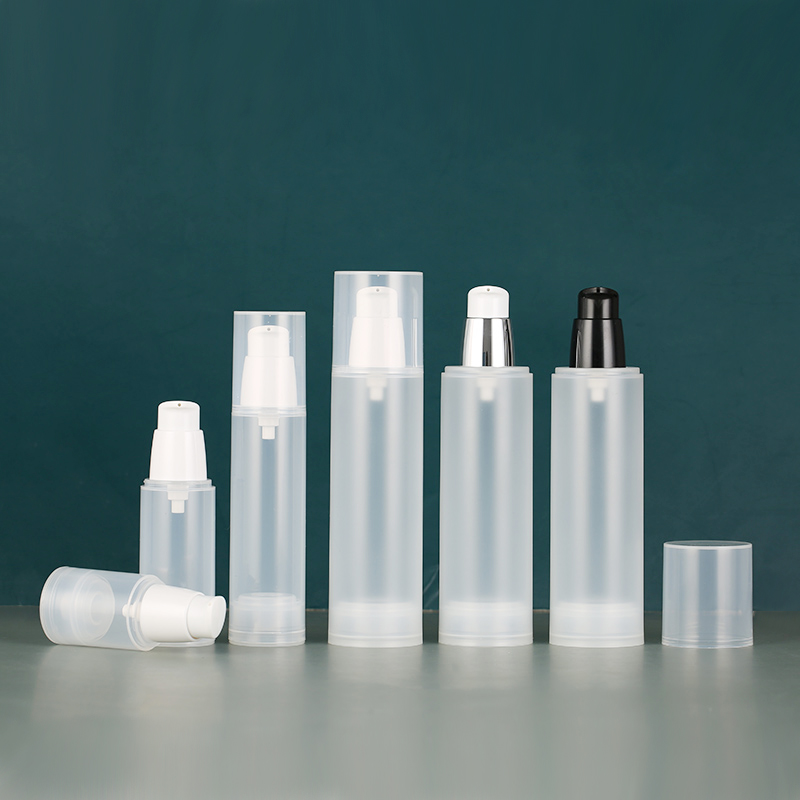
Larger airless bottles are often overlooked, but they serve a specific audience.
Who Uses These Sizes?
- Professional skincare clinics
- Salon backbar products
- Body care treatments
- Brands offering refill-conscious consumers better value
Airless pump bottles in the 100ml to 150ml range excel when hygiene and consistency matter across multiple users. Clinics appreciate controlled dosing and reduced contamination risk.
Cosmopacks offers airless pump bottles up to 150ml with durable polymer plastics like PP and PETG. These materials keep weight manageable while maintaining strength.
Shelf Presence vs Practicality
At this size, aesthetics still matter, but function leads. Brands often choose neutral colors like white, black, or frosted finishes that signal cleanliness and professionalism.
200ml to 250ml Airless Pump Bottles: When Scale Meets Sustainability
Airless packaging at this size is not common, but it is growing.
Why Brands Choose Large Airless Bottles
- Refill stations and eco-conscious product lines
- Body care and medical creams
- Institutional or wholesale applications
Large airless bottles reduce packaging waste per unit of product. When paired with refillable designs, they support sustainability goals without sacrificing hygiene.
Cosmopacks supports large-capacity airless pump bottle manufacturing with customization options that ensure pump performance remains consistent, even with thicker formulas.
How Product Viscosity Influences Size Choice
Size decisions cannot be separated from formulation.
Highly viscous creams behave differently than lightweight serums. Airless pumps can handle both, but output volume and bottle size must align.
For example:
- Thick creams often pair better with larger sizes and higher output pumps
- Lightweight serums work well in smaller bottles with lower output
Cosmopacks designs airless cosmetic bottles with pump outputs like 0.2cc, 0.5cc, and 1ml to match real usage patterns. This reduces over-dispensing and waste.
The Role of Materials in Different Bottle Sizes
Material choice matters more as bottle size increases.
Common Materials Used
- PP for lightweight, recyclable solutions
- PETG for clarity and durability
- Acrylic for premium, double-wall designs
- Glass for high-end or sensitive formulations
Cosmopacks uses eco-friendly materials, including PCR plastics, to balance sustainability with performance. For smaller sizes, acrylic and PP are popular. For larger bottles, weight and shatter resistance push brands toward advanced plastics.
Refillable Airless Pump Bottles: When and When Not to Use Them
Refillable airless pump bottles sound ideal, but they require discipline.
When Refillable Makes Sense
- Controlled refill programs
- Professional environments
- Brands educating customers on proper refilling
When It Becomes Risky
- Open consumer refilling without guidance
- Products sensitive to contamination
Cosmopacks offers refillable designs, but always emphasizes proper handling. A refillable bottle is only sustainable if it remains hygienic.
Branding, Printing, and Surface Finishing by Size
Larger bottles offer more room for storytelling, but even small ones matter.
Cosmopacks supports:
- Silk-screen printing
- Foil hot stamping
- UV lacquering
- Matte and glossy metallic finishes
- Frosted “Ice Matte” effects
Smaller bottles often rely on subtle branding. Larger ones can support more detailed messaging. Choosing finishes that match size and market positioning strengthens brand consistency.
Working with a Wholesale Supplier Who Understands Scale
Choosing bottle size is easier when your supplier understands growth.
Cosmopacks brings more than ten years of experience as a supplier of cosmetic packaging for skincare and body care products. Serving over 100 cosmetic brands worldwide, the team supports brands from early sampling to large-scale production.
Flexible MOQ options, OEM and ODM capabilities, and attentive service make it possible to evolve packaging strategies without constant redesigns.
Real-World Questions Brands Ask Before Finalizing Size
Will customers finish the product before it expires?
Does the size match daily usage habits?
Is the pump output appropriate for the formula?
Will shipping costs scale reasonably?
Does the size support sampling, travel, or refill goals?
Brands that answer these honestly avoid costly rework later.
Final Thoughts: Size Is Strategy
Choosing the right airless pump bottle size is not just a packaging decision. It is a product strategy, a branding signal, and a trust-building tool.
From 5ml samples that introduce your formula to 250ml packs that support sustainability and professional use, each size has a role. The key is alignment. Align size with product behavior, customer expectations, and long-term brand goals.
If you are unsure where to start, talking to an experienced wholesale supplier helps. Cosmopacks works with brands at every stage, offering guidance rooted in real production experience rather than theory.
Reach out directly to George Lu at george@cosmopacks.com or +1 626 203 5398.