Wholesale PCR Cosmetic Tubes
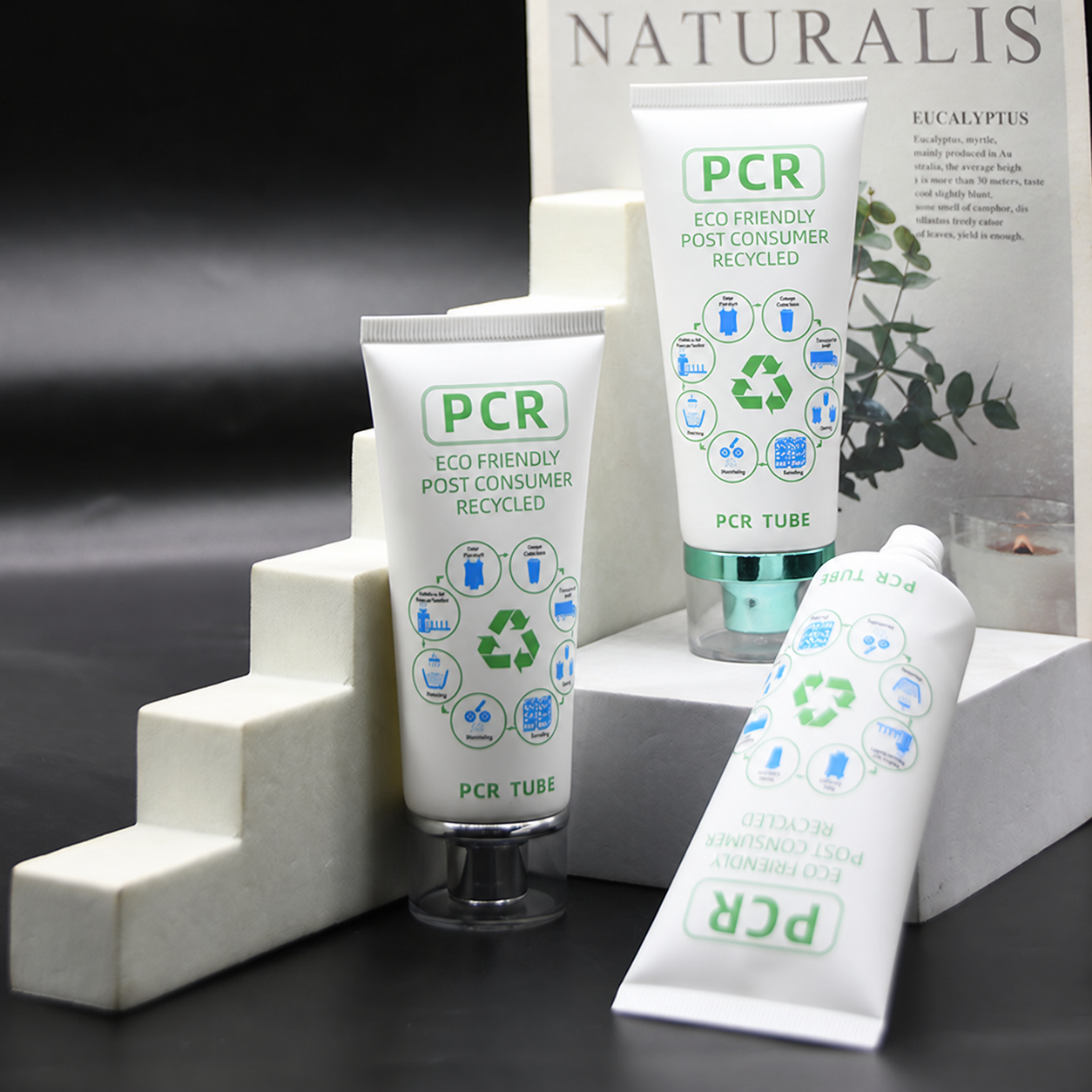
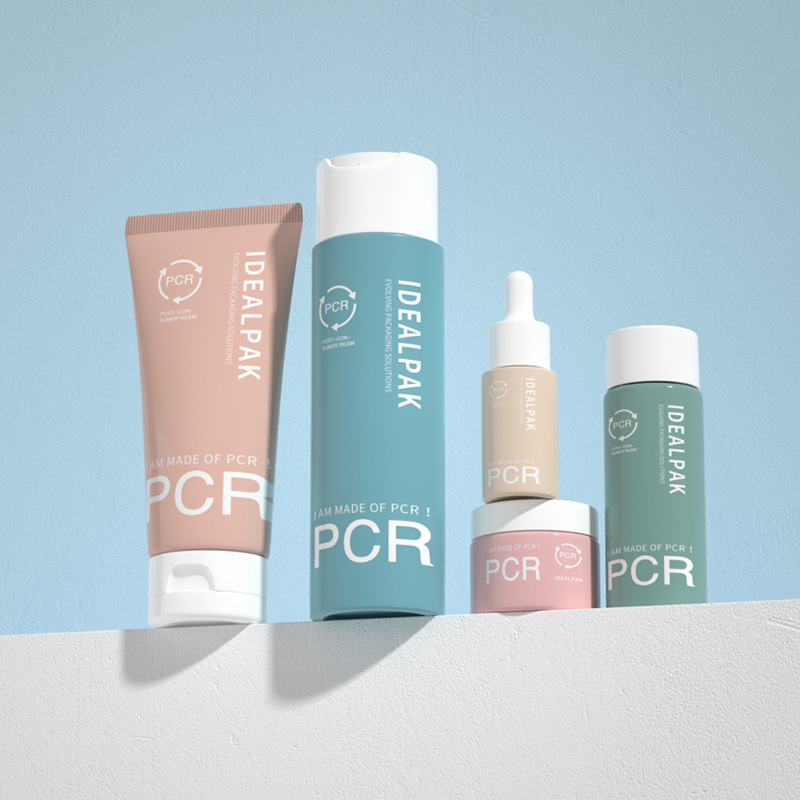
PCR cosmetic tubes use post-consumer recycled plastic in the tube body to reduce demand for virgin resin. They are suitable for skincare, sunscreen, hand cream, facial cleanser, body care, hair care, and other personal-care products where brands want to introduce verified recycled content into their packaging.
Cosmopacks supplies custom PCR cosmetic tubes with tube-body PCR content available from 30% to 70%. The appropriate percentage depends on the selected tube construction, formula, color, decoration, appearance standard, and mechanical-performance requirements. Custom printing and cap options are available from a standard MOQ of 5,000 units.
PCR Cosmetic Tube Specifications
| Specification | Available Details |
|---|
| PCR content | 30%–70% PCR in the tube body, subject to the approved construction and specification |
| Typical capacity | 50ml featured format; additional capacities may be available |
| Applications | Skincare cream, sunscreen, cleanser, hand cream, body care and hair-care products |
| Tube construction | Model-dependent plastic tube structure; layer composition must be confirmed for the selected specification |
| Closure options | Flip-top and screw-cap options, subject to neck and model availability |
| Decoration | Offset printing, screen printing, hot stamping, labeling and compatible surface finishes |
| Color options | Natural PCR appearance, white, opaque and custom colors, subject to PCR level and color feasibility |
| Standard MOQ | 5,000 units per approved size, color and decoration specification |
| Testing samples | Available for formula compatibility, sealing, decoration and mechanical-performance evaluation |
PCR percentage notice: The stated 30%–70% range applies to the tube body under the approved specification. It should not automatically be interpreted as the recycled content of the entire package. The tube shoulder, neck, cap, ink, foil, coating and other components may have different material compositions.
Choosing Between 30%, 50% and 70% PCR
30% PCR Tube Body
A 30% PCR specification can provide a practical starting point for brands introducing recycled content while seeking greater control over color, surface appearance and processing consistency. It may be appropriate when decoration quality and tight visual standards are important.
50% PCR Tube Body
A 50% PCR tube body provides a higher recycled-content position while maintaining flexibility for many cosmetic applications. Color, odor, print appearance and mechanical performance still need to be reviewed with production-representative samples.
70% PCR Tube Body
A 70% PCR tube body maximizes the available recycled content within this product range. Higher PCR content can make natural color variation, small surface differences, odor, haze or batch variation more noticeable. These characteristics should be defined and approved before production rather than evaluated only after finished tubes are delivered.
The highest available PCR percentage is not automatically the correct choice for every project. Formula compatibility, squeeze recovery, sealing, decoration, color requirements and customer expectations should be considered together.
Applications for PCR Cosmetic Tubes
Facial Cream and Moisturizer
PCR tubes can be evaluated for facial creams and moisturizers when the formula is compatible with the selected tube structure. Oils, fragrance, active ingredients and low-pH systems may affect the inner contact layer or sealing performance.
Sunscreen
Sunscreen formulas can contain UV filters and oil phases that create additional compatibility demands. Testing should examine panel softening, swelling, seam performance, discoloration, odor transfer and formula migration. Decoration should also be checked for resistance to sunscreen ingredients.
Hand Cream and Body Care
Hand creams and body-care products are common tube applications. The selected tube should provide suitable squeeze force, shape recovery and controlled product dispensing throughout the intended use period.
Facial Cleanser
Surfactant-based cleansers should be tested for seal integrity, cap leakage and stress effects on the tube and shoulder. Side and inverted storage are particularly relevant because consumers often store tubes cap-down.
Hair-Care Products
Conditioners, masks and styling creams may be suitable for PCR tubes, depending on viscosity and composition. The dispensing orifice should be selected using the finished formula rather than relying only on the nominal fill capacity.
What PCR Means—and What It Does Not Mean
PCR stands for post-consumer recycled material. It is resin recovered from products that have already been used by consumers and then collected, processed and reintroduced into manufacturing.
Using PCR can reduce the demand for virgin plastic, but PCR content alone does not prove that the complete package is recyclable, carbon neutral or environmentally harmless. Responsible claims should identify:
- The component containing PCR material;
- The percentage of PCR in that component;
- Whether the percentage is calculated by component weight;
- The supplier documentation supporting the recycled-content claim;
- Any exclusions, such as the cap, shoulder, inks, coatings or foil;
- The market in which a recyclability claim will be used.
A suitable customer statement would be: “The tube body contains 50% post-consumer recycled plastic by weight.” Avoid broad claims such as “100% sustainable” unless there is specific evidence supporting the complete claim.
Appearance and Color Considerations
PCR resin may have more natural variation than virgin resin. As the PCR percentage increases, differences in base color, haze, small visual inclusions or surface consistency may become more noticeable.
Before approving a custom color:
- Confirm the PCR percentage used in the color sample;
- Approve an acceptable color range rather than only one reference point;
- Review the tube under consistent lighting conditions;
- Test printing and foil adhesion on the actual PCR tube surface;
- Define acceptable visual variation in the quality specification;
- Review whether a dark or opaque color can better accommodate PCR variation.
A color sample produced with virgin material may not accurately represent the appearance of a 50% or 70% PCR production tube.
Tube Construction and Formula Protection
The performance of a PCR tube depends on more than the recycled-content percentage. Tube construction, wall thickness, shoulder design, inner contact surface, cap seal and manufacturing controls all contribute to formula protection.
Some formulas may require additional barrier performance to control oxygen, moisture, fragrance or solvent transfer. If a multilayer or barrier structure is used, the complete material composition and recycling implications should be confirmed before making environmental claims.
Request a component-level specification identifying:
- Tube-body materials and PCR percentage;
- Layer structure where applicable;
- Shoulder and neck materials;
- Cap and liner materials;
- Colorants, inks, coatings and decorative foil;
- Nominal tube weight and tolerance.
Mechanical and Closure Performance
PCR content can influence processing behavior and mechanical properties. Production-representative samples should be evaluated for:
- Squeeze force and recovery after dispensing;
- Panel creasing, splitting or stress whitening;
- Shoulder and side-seam integrity;
- Cap retention and hinge durability;
- Thread engagement and closing torque;
- Leakage during side and inverted storage;
- Drop, compression and transportation performance;
- Changes after elevated-temperature and low-temperature storage.
The selected PCR percentage should remain unchanged between the approved sample and production test. Testing a 30% PCR sample does not automatically validate a later 70% PCR specification.
Formula Compatibility Testing
Compatibility testing should use the actual formula, production-representative tube construction, selected PCR percentage, cap, decoration and filling process.
- Record initial appearance, weight, dimensions and seal condition;
- Store samples upright, horizontally and cap-down where appropriate;
- Include room-temperature and elevated-temperature conditions;
- Inspect for swelling, softening, cracking, delamination and discoloration;
- Check odor transfer and changes in formula color or viscosity;
- Evaluate cap leakage and product accumulation around the orifice;
- Test decoration adhesion after formula contact and repeated handling;
- Complete transit, drop and compression testing using filled packages.
Review our cosmetic packaging compatibility testing guide for additional testing considerations.
Documentation to Request
Before making a recycled-content claim, buyers should request documentation covering the supplied production material.
- PCR percentage declaration for the tube body;
- Material or resin identification;
- Supplier or chain-of-custody documentation where available;
- Production lot traceability;
- Component-level material breakdown;
- Applicable regulatory and restricted-substance declarations;
- Approved color and visual-tolerance standard.
Customers can also review our broader custom cosmetic tube collection and eco-friendly cosmetic packaging options.
Frequently Asked Questions
How much PCR material can be used in the tube?
Cosmopacks can supply tube-body PCR content from 30% to 70%, depending on the selected tube construction, color, decoration and performance requirements. The final percentage should be stated in the approved specification.
Does the complete package contain 30%–70% PCR?
Not necessarily. The stated range applies to the tube body. The shoulder, neck, cap, liner, inks, coatings and decorative elements may use different materials and should be documented separately.
Will higher PCR content affect the tube’s appearance?
It can. Higher PCR content may increase natural variation in color, haze, surface appearance or small visual inclusions. Production tolerances and an approved appearance range should be established before mass production.
Can PCR cosmetic tubes be used for sunscreen?
They may be suitable, but sunscreen formulas require compatibility testing because UV filters, oils and solvents can affect tube materials, seals and decoration. Testing must use the actual formula and intended PCR percentage.
Are PCR cosmetic tubes recyclable?
Recyclability depends on the complete tube construction, cap, barrier layers, decoration and local collection systems. PCR content and recyclability are different attributes, so recyclability claims should be supported separately.
What is the MOQ for a custom PCR cosmetic tube?
The standard MOQ is 5,000 units per approved size, PCR percentage, color and decoration specification. Special constructions or custom tooling may require a different quantity.
Request PCR Cosmetic Tube Samples
Share your formula, capacity, preferred PCR percentage, color and decoration requirements. Cosmopacks will recommend suitable tube options for compatibility and performance evaluation.
Request Samples & Pricing